Should (some) seniors be banned from social media?
This is not a serious proposal, but there are arguments supporting controls on screen time for vulnerable adults.

Stay SAFE online with NSA
The internet offers countless ways to stay connected, manage finances, access services, and keep in touch with family and friends.
But as online scams become more sophisticated, it's important to build skills and confidence to recognise potential risks.
National Seniors Australia (NSA) provides practical resources to help older Australians use the internet safely.
For more information about our Be Connected digital skills program and other initiatives, visit our Stay Scam SAFE page.
Australia's landmark decision to introduce a minimum age for social media has sparked debate around the world.
The legislation, designed to protect children from online harms, has prompted other countries, including the United Kingdom and Malaysia, to consider whether similar restrictions or stronger safeguards should be adopted.
But as this discussion gathers pace, another important question has resurfaced: if governments accept that social media can be harmful enough to justify age-based protections for children, should vulnerable older adults also receive greater protection?
Opinion articles published in The Guardian and The Independent at the beginning of the debate about banning kids from certain online platforms have resurfaced in recent weeks.
They argue that the conversation about online safety should not be limited to children and teenagers. Older adults are increasingly becoming the primary targets of sophisticated scams, financial fraud, misinformation, and AI-generated deception.
Criminals use convincing fake emails, cloned voices, manipulated videos, and fraudulent social media accounts to trick people into handing over money or personal information.
Older users are disproportionately affected, often because they did not grow up with digital technology and may be less familiar with the warning signs of online manipulation.

The argument put forward is that vulnerability is not determined simply by age.
Instead, governments should recognise that some adults – particularly older people experiencing cognitive decline, loneliness, or limited digital literacy – face many of the same challenges that prompted stronger protections for children.
Even though the idea of banning seniors from social media has been raised satirically, nobody is seriously proposing that.
The real argument is that technology companies should be required to make their platforms safer for all vulnerable users.
This could include stronger identity verification, better detection of scams, quicker removal of fraudulent accounts, and greater responsibility for preventing harmful content from spreading.
The debate comes at a time when several countries are reassessing how social media should be regulated.
Australia has led the way with its youth-focused legislation, while the United Kingdom continues to strengthen cyber safety rules through its Online Safety Act.
In our region, Indonesia, Malaysia, and Fiji are among countries that have also introduced tighter oversight of social media platforms in response to concerns about harmful online content and criminal misuse.
Whether governments eventually extend special protections to older adults remains to be seen.
However, the underlying argument is attracting increasing attention: if society recognises that some groups need additional protection from online harms, policy should focus less on chronological age and more on vulnerability.
For seniors, staying connected online brings enormous benefits, but it also requires constant vigilance.
As scams become more sophisticated, stronger platform safeguards may prove just as important as individual awareness.

Disclaimer: This article is for information purposes only and should not be considered medical advice. Consult a healthcare professional about any health concerns or before making any changes to your medication, diet, or exercise routine.

Thousands of Australia-wide discounts
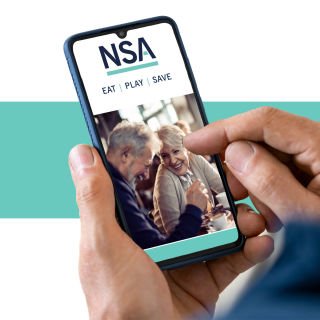
Exclusive offers and savings across dining, shopping, gift cards, and more – all in the EAT | PLAY | SAVE app.

Members save 10% on Travel Insurance*
National Seniors members receive a 10% discount on travel insurance policies*.
Financial Information Consultant
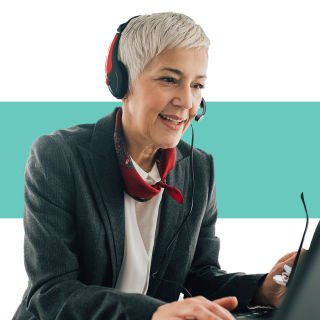
Speak to a real person and receive up-to-date information on retirement planning, superannuation, and more!
Branches
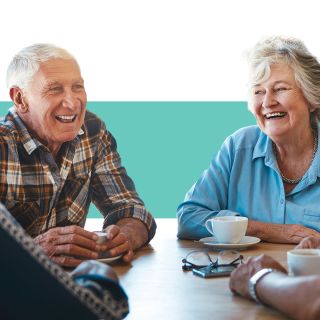
Expand your social circle, enjoy social events, day trips, guest speakers, and meet like-minded members.

Exclusive Travel Discounts
Save on tours, cruises, and holidays with exclusive discounts on National Seniors Travel.

Our Generation Digital Magazine
Receive a yearly subscription to Our Generation Digital Magazine.

The Good Guys Commercial
Members enjoy exclusive access to The Good Guys Corporate Benefits. Save on small and large appliances as well as technology.
Advocacy & Research
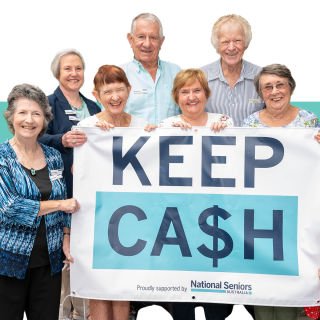
Your membership directly funds our advocacy and research work fighting issues that affect you.

Competitions
Access exclusive member-only weekly competitions including books, DVDs, CDs, movie tickets and more.

Discounts
In addition to the discounts app, members can save thousands on eGift Cards and other discounted products.
*The discount applies to the total National Seniors travel insurance premium and is for National Seniors Australia members only. Discounts do not apply to the rate of GST and stamp duty or any changes you make to the policy. AGA has the discretion to withdraw or amend this discount offer at any time. This discount cannot be used in conjunction with any other promotional offer or discount.
National Seniors Australia Ltd ABN 89 050 523 003, AR 282736, is an authorised representative of AWP Australia Pty Ltd, ABN 52 097 227 177, AFSL 245631, trading as Allianz Global Assistance (AGA), and acts as AGA's agent and not as your agent. nib Travel Services (Australia) Pty Ltd (nib), ABN 81 115 932 173, AFSL 308461 acts as third party administrator on behalf of AGA, managing claims, complaints, enquiries and sales. This is general advice only. Before you buy, you should consider whether the product is appropriate for you, the Product Disclosure Statement (PDS), Financial Services Guide (FSG) and Target Market Determination (TMD) is available from us. This insurance is underwritten by Pacific International Insurance Pty Ltd, ABN 83 169 311 193, AFSL 523921.