Why words really matter
A seemingly unusual choice by the Cambridge Dictionary says something important about who we are.
Each year, major dictionaries nominate a "word of the year" to capture something important about the times in which we live.
These annual choices provide a fascinating snapshot of society's concerns, interests, and obsessions.
In 2026, Cambridge Dictionary chose the word "human". At first glance, it seems an unlikely winner. After all, it is one of the oldest and most familiar words in the English language.
Yet Cambridge's lexicographers say it perfectly reflects a year in which artificial intelligence (AI) has prompted people to ask a fundamental question: what does it mean to be human?
The dictionary points to the growing use of terms such as human-made, human-written, and human-generated as people seek to distinguish work created by people from content produced by machines.
In an age of chatbots, AI-generated images, and automated decision-making, the simple word human has taken on fresh significance.
Recent "words of the year" from other dictionaries reveal similar themes. In 2024, Oxford University Press selected "brain-rot", a term describing the supposed decline in mental sharpness caused by consuming too much low-quality online content.
The phrase became especially popular among younger social media users, who use it with a mixture of humour and self-awareness.
Meanwhile, Collins Dictionary's 2026 word of the year is "mogging" which apparently means to outshine, outperform, or upstage someone or something. And Macquarie Dictionary has anointed "pervert glasses" – a reference to smart glasses which include cameras.
Collins' 2025 winner was "vibe coding", a phrase describing the use of AI to generate computer code simply by telling a machine what you want to create. It reflects a world in which technology is becoming more conversational and, some might say, more mysterious.

Other recent additions to dictionaries can leave many of us scratching our heads. Terms such as "aura farming", "looksmaxxing", "taskmasking", and "FOBO" (fear of becoming obsolete) seem to arrive and spread rapidly online.
For older Australians, keeping up with this constant stream of new expressions can feel a bit exhausting. Just when you've worked out what a "selfie" is, along comes "brain rot" or "rizz".
But that's really nothing new. Language has always evolved. Every generation invents words that puzzle its parents and grandparents. Many expressions we now consider perfectly ordinary were once regarded as strange interlopers.
At the same time, there is something comforting about holding on to favourite words and phrases from earlier decades.
A well-chosen traditional expression often says exactly what we mean. There is no rule requiring us to replace "telephone" with "device" or "letter" with "content".
So, should we all try to get with the latest terminology? Perhaps.
Understanding newer words can help us follow conversations, navigate technology, and stay connected with younger family members and friends. But understanding a word is not the same as choosing to use it.
Good communication is about clarity, not fashion. If a new expression helps make a point more clearly, use it. If an older word feels more natural and better suits your audience, there's no shame in sticking with it.
At the same time, we need to be aware when a word's meaning shifts so dramatically – as, for example, "gay" did across the 20th century. We must accept the new definition has superseded the old.
If Cambridge Dictionary's choice of "human" tells us anything, it may be that in a world of artificial intelligence, authenticity still matters.


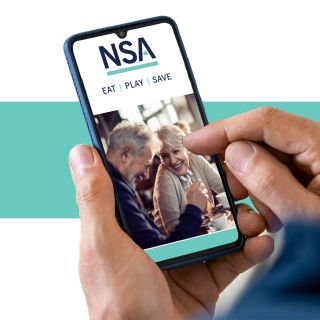
Thousands of Australia-wide discounts
Exclusive offers and savings across dining, shopping, gift cards, and more – all in the EAT | PLAY | SAVE app.

Members save 10% on Travel Insurance*
National Seniors members receive a 10% discount on travel insurance policies*.

Financial Information Consultant
Speak to a real person and receive up-to-date information on retirement planning, superannuation, and more!
Branches
Expand your social circle, enjoy social events, day trips, guest speakers, and meet like-minded members.

Exclusive Travel Discounts
Save on tours, cruises, and holidays with exclusive discounts on National Seniors Travel.
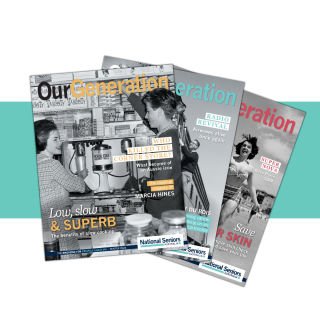
Our Generation Digital Magazine
Receive a yearly subscription to Our Generation Digital Magazine.
The Good Guys Commercial
Members enjoy exclusive access to The Good Guys Corporate Benefits. Save on small and large appliances as well as technology.
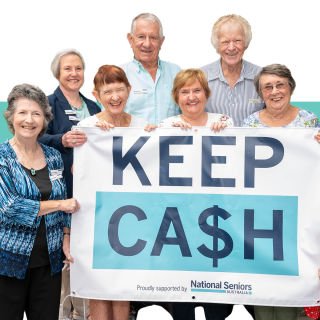
Advocacy & Research
Your membership directly funds our advocacy and research work fighting issues that affect you.
Competitions
Access exclusive member-only weekly competitions including books, DVDs, CDs, movie tickets and more.

Discounts
In addition to the discounts app, members can save thousands on eGift Cards and other discounted products.
*The discount applies to the total National Seniors travel insurance premium and is for National Seniors Australia members only. Discounts do not apply to the rate of GST and stamp duty or any changes you make to the policy. AGA has the discretion to withdraw or amend this discount offer at any time. This discount cannot be used in conjunction with any other promotional offer or discount.
National Seniors Australia Ltd ABN 89 050 523 003, AR 282736, is an authorised representative of AWP Australia Pty Ltd, ABN 52 097 227 177, AFSL 245631, trading as Allianz Global Assistance (AGA), and acts as AGA's agent and not as your agent. nib Travel Services (Australia) Pty Ltd (nib), ABN 81 115 932 173, AFSL 308461 acts as third party administrator on behalf of AGA, managing claims, complaints, enquiries and sales. This is general advice only. Before you buy, you should consider whether the product is appropriate for you, the Product Disclosure Statement (PDS), Financial Services Guide (FSG) and Target Market Determination (TMD) is available from us. This insurance is underwritten by Pacific International Insurance Pty Ltd, ABN 83 169 311 193, AFSL 523921.