What’s in a name?
Aussies are on the same page about most things to do with our lifestyle, but some small matters still divide us.
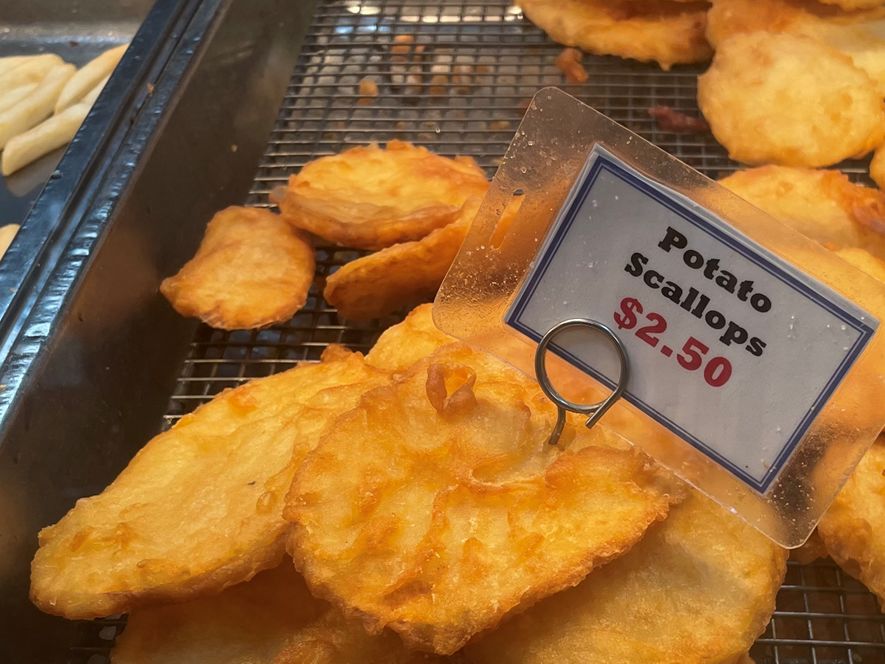
Is a slice of potato, fried in batter, called a scallop, a fritter, or a cake? Or perhaps even a hash brown? Well, it depends on where you live.
It’s such a contentious issue that there are online groups where people make their case for one term over the others. I believe the discussion can get quite heated.
And that’s just one example of how, even in a country as apparently homogeneous as Australia, we have different names for the same thing. And we’re passionate about it when others get it “wrong”.
In Queensland and some parts of New South Wales and the Northern Territory, you’re likely to ask for a “potato scallop” at the local fish and chip shop. But if you go to Victoria or South Australia, you might be met with a blank stare unless you ask for a “potato cake”. In Western Australia, it might be a cake or a fritter – or a scallop. I’ve seen all three terms used in menus!
Same food, different names – and there’s a surprising amount of regional pride attached to each.
Things got a little further confused in the 1970s when fast-food chains such as McDonald’s introduced us to the “hash brown”, which has a long history in the United States and Europe.
In any case, the linguistic divide doesn’t stop with deep-fried snacks.
Consider the humble swimming costume. In Queensland, you wear “togs” to the beach but, in NSW, they might be “swimmers” or a “cozzie”, while elsewhere they’re “bathers”. Using the geographically inappropriate term will instantly mark you as an outsider.

Then there’s the great devon/fritz/polony debate. All are names for the same processed delicatessen meat, depending on your postcode.
These regional variations aren’t just limited to Australia. In the United States, soft drinks are “soda” in some states, “pop” in others, and “coke” in parts of the South – even when referring to non-Coca-Cola beverages.
In the UK (and in parts of Australia), the evening meal might be “dinner” or “tea”, depending on where you set your table.
But it’s nothing to get upset about.
Language is a living, evolving thing, shaped by geography, history, and community. These differences in terminology reflect our diverse identities and regional quirks.
While they can be a source of confusion, or even heated debate, they also add colour and character to our conversations.
So, next time someone offers you a potato cake when you are expecting a potato scallop, don’t get annoyed. Instead, take a moment to appreciate the rich tapestry of language that helps make Australia, and the world, such a wonderfully diverse place.