Round and round, up and down
The Go-Betweens’ frontman, Robert Forster, reflects on his career in the music industry, the craft of songwriting, and how both shaped his newly-released debut fiction novel, Songwriters on the Run.
By Meghan Fallis
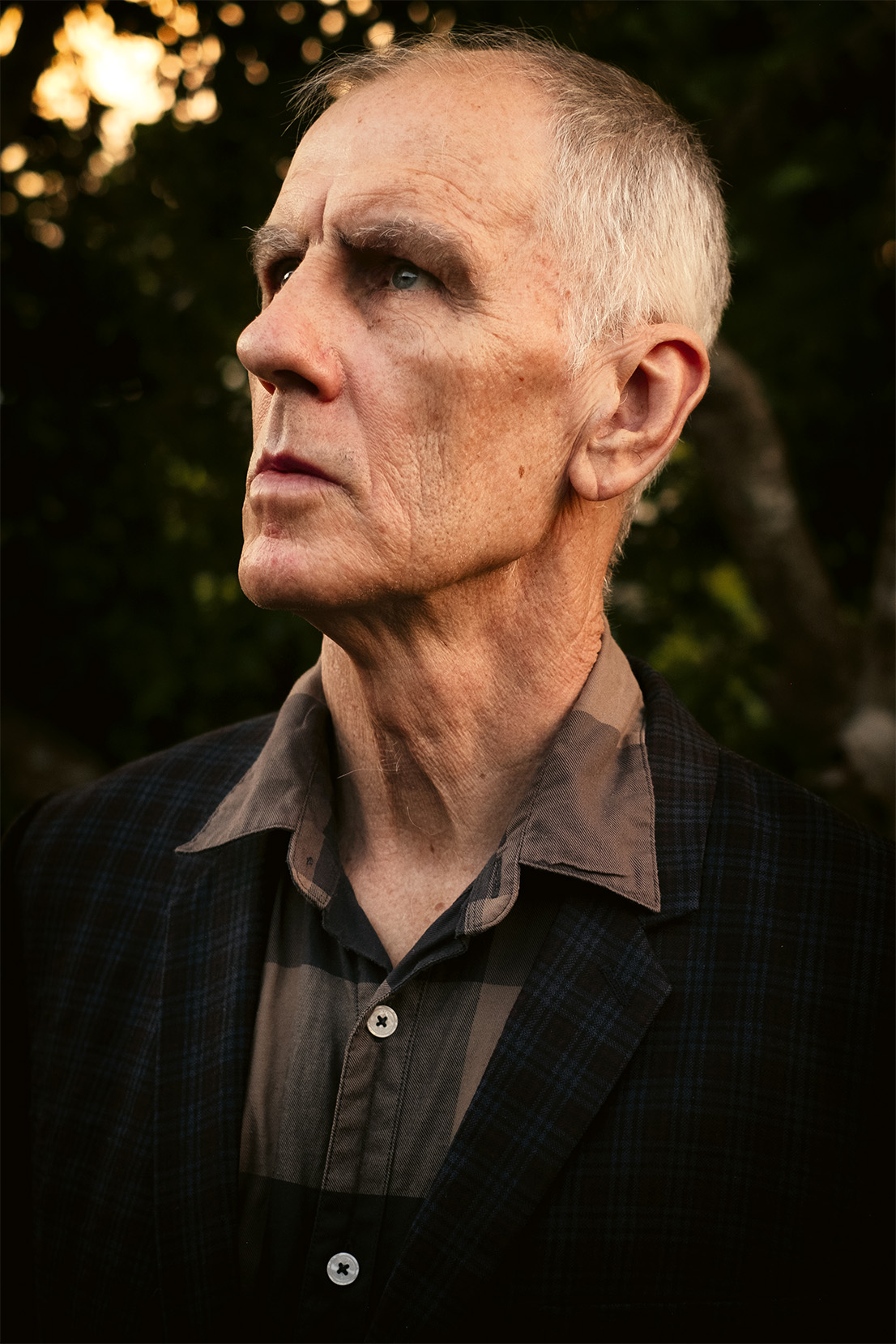
Robert Forster is no stranger to storytelling.
He’s best known as the co lead singer-songwriter from Australian indie rock band The Go-Betweens, but Robert’s evocative, narrative-style lyrics are just a scratch on the surface of his extensive writing repertoire.
In addition to the more than 100 officially released self-written songs in the Brisbane-born musician’s music catalogue, Robert has written music critiques for national current affairs magazine The Monthly and The Saturday Paper, for which he won the prestigious Pascall Prize for Arts Criticism in 2006.
Robert also wrote the successful non-fiction titles The 10 Rules of Rock and Roll and Grant & I, a memoir dedicated to his friendship with The Go-Betweens’ co-lead, the late Grant McClelland.
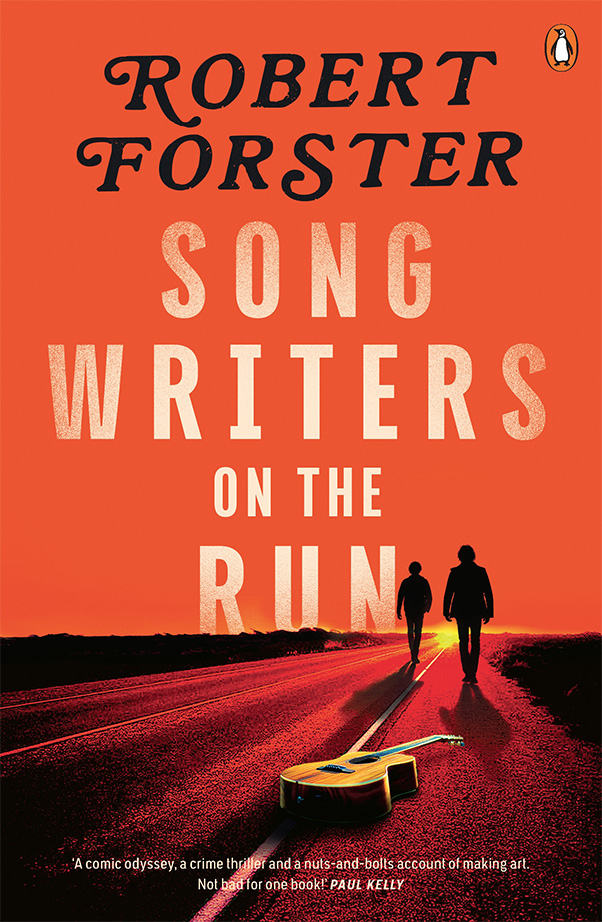
In May, Robert officially released his first fiction novel Songwriters on the Run—a story circling ‘rock-star wrecked handsome’ music duo Mick Woods and Drew Lovelock in 90s regional Queensland.
After being swept up in a drug bust, the pair scramble to evade the arms of the law in hopes of returning to their beloved music.
Those familiar with Forster’s music will recognise the novel’s title, which shares its name with one of Robert’s solo single records.
“I wrote the song called Songwriters on the Run [in] 2009, and it was just like any other song—you write it and you think that you’re going to record it and you’ll sing it, but basically the song is done,” Robert says.
“But the lyrics stuck with me. I started to think of why the songwriters were on the run, and why they were in jail, and who put them in jail, and where the songwriters were running to.
“I had a lot of the plot in my head, probably about 80% of [it], because I’d been thinking about the song since I wrote it.”
Robert completed the book over nine years, penning most of the novel during the pandemic when his gigs were cancelled.
While the plot came to him naturally, Robert says it was difficult to incorporate elements of writing he’d never had to consider in his decades-long songwriting career.
“With a book, you’ve got to paint the pictures in people’s minds with the words [whereas] with a song… mood and music can install this feeling—you're telling people a story, but the instrumentation of a song is also helping you,” Robert says.
“The thing that’s constant [in both] is you’re dealing with words, and that’s what I like doing in songs and in fiction or nonfiction… playing with words and using them to describe feelings or ideas I have.
“There [aren’t] many songwriters that are writing novels, and there aren’t many novelists that are writing songs. They really are separate crafts.”
Perhaps unsurprisingly, Robert found constructing the dialogue between Mick and Drew to be the most enjoyable aspect of writing the novel.
“Musicians talking about music I find very easy to write because it’s been so much a part of my life, so it comes to me quite naturally,” he says.
“I’ve always found that musicians talk a lot about music—they love discussing their favourite songs, albums, or artists that influence them. That was a big thing that I wanted to convey—the joy and enthusiasm that musicians have for music because I think that can be forgotten.
“I was just happy to reveal the process of [how] songwriters think and how they go about building a song. These are things that I know intimately, so I wanted to incorporate that into the book, definitely.”
You’d be forgiven for thinking the novel is based on true events, but Robert says this is far from the case.
“I’ve never been in jail. I’ve never been busted for drugs,” he laughs.

The fact that Robert wasn’t raised in a musical family makes his subsequent success as a singer-songwriter even more impressive.
It was listening to the radio in the late 60s that sparked young Robert’s passion for music.
“We didn’t have a record player, we didn't have albums lying around, so it was just mainly the transistor radio in the house that I commandeered after a while. There were a lot of great songs in that period—it was an era of songwriting,” Robert says.
“Because there was no musician in my family, I had no idea that I was heading to writing songs myself.
“I didn’t really start playing guitar until I was 14 or 15, [but songs] captured me right from when I was a little boy all the way through into teenagehood.”
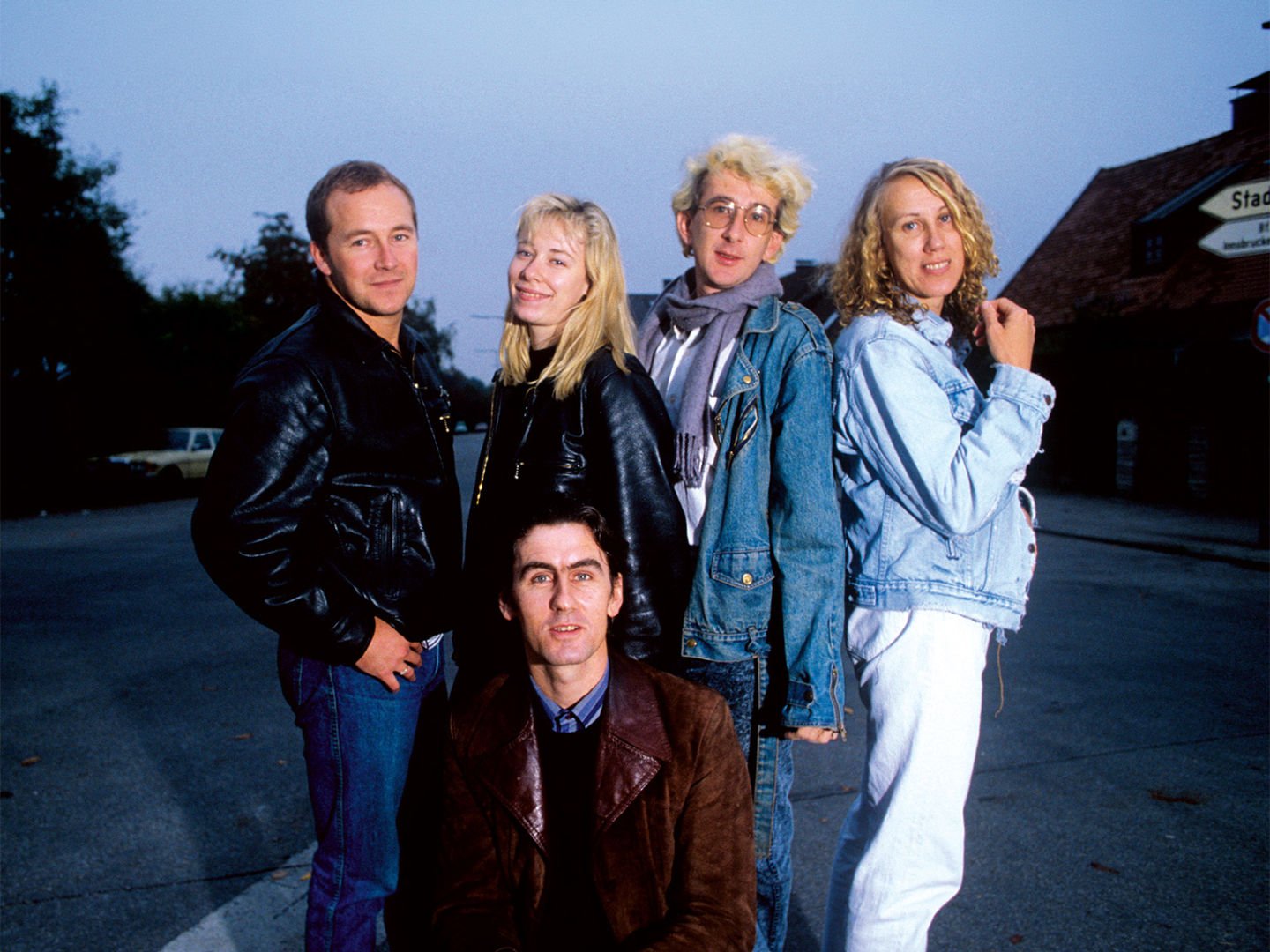
Robert and Grant became friends while studying theatre arts at the University of Queensland and formed The Go-Betweens almost immediately. The band’s name was inspired by L.P. Hartley's classic 1953 novel, The Go-Between.
“Our first single, Lee Remick, and the B-side track Karen, which The Go-Betweens made in 1978—that was probably the one moment that was just totally unexpected, our first single,” Robert says.
“In the 70s, lots of bands formed—not many made records—and we were just university students who managed to make a record. It was extraordinary at that moment.
“[You’re] listening to radio when you're a child, virtually. And then, you’re 21 hearing your first single on the radio—it was an amazing turn of events.”
The Go-Betweens went on to release five studio albums between 1981 and 1988 and received ARIA nominations for Best Group and Song of the Year in 1989. In May 2001, the single Cattle and Cane from the band’s 1983 album Before Hollywood was dubbed by the Australasian Performing Right Association as one of the top 30 Australian songs of all time.
“Music is good for the heart and health and soul and well-being—all those things—and I think people need to get as much as they can,” Robert says.
“You don’t have to tell someone who's really engaged with [music] to practice three hours a day or listen to music because that’s what they’re going to do.
“If you’re caught in it and you really want to make it a career, then you shouldn’t be forcing yourself to do anything, because the passion you have is ruling what you're doing. Just give over to the passion and follow what you love about it.”
The Go-Betweens split during the 90s before reforming in 2000 and producing three further albums before Grant passed away in 2006.
Robert recalls that era of travelling, touring, and playing music with the band as a more innocent and mysterious time, where the absence of mobile phones made discovering new things thrilling.
“You are seeing new places, which I really enjoy, and it’s basically building good life experience,” Robert says.“It’s got me out of Australia at times, it’s got me out of Brisbane where I live, and I find all of this really good.”
The privilege of making music for a living isn’t lost on Robert.
“You can feel the support and love in the room. You can feel that people know your music and are dedicated to it,” Robert says.
“These are things you can ride when you’re on stage. It’s an absolute joy. I think it’s easy to lose sight of that, but it makes you treasure it even more.”
The Go-Betweens’ legacy extends far beyond the band’s discography. In 2008, the band’s 16 Lovers Lane was featured on SBS TV's Great Australian Albums series as an example of classic 80s rock, and in 2009, the Brisbane City Council renamed one of the city’s most prominent bridges, the Go Between Bridge, in the band’s honour.
While the band’s heyday may have passed, die-hard fans can be rest assured The Go-Betweens’ music isn’t going anywhere.
“There’ll be album reissues and things like that,” Robert says.
“The music will never die—the songs carry on the band’s story. The recordings and albums that we made, that’s every chapter of the band’s life and so that’ll continue to be appreciated, I hope. But the records are there, the songs are there, the musicianship is there, so I’m very happy with that.”
Decades on, hearing the band’s songs still makes Robert smile.
“It makes me very, very proud,” he says.
“I hear Streets of Your Town on the radio, on TV, in Bunnings, Coles, and it’s lovely pushing the trolley down the aisle and hearing a song that you played coming over the sound system… that is a beautiful thing.
“It takes me back, and it makes me happy in the present.”
Songwriters on the Run by Robert Forster is available now from Penguin Books.

This article is featured in National Seniors Australia’s quarterly member magazine, Our Generation.
Become a member today and receive a yearly subscription to Our Generation digital magazine as part of your membership, along with exclusive discounts, competitions, branch access and more!
Your membership directly funds our advocacy and research work that benefits older Australians including fixing pension poverty, tackling health care costs, and improving aged care.