Super fund scams: How to protect your retirement savings
ASIC says super funds need to step up scam protections. Here's what to know and how to protect yourself.

About Effie Zahos
Effie Zahos is a Director of InvestSMART and 9News Money Editor. She is one of Australia's leading personal finance commentators with 30 years of experience helping Australians make the most of their money. Effie is also the author of The Great $20 Adventure, A Real Girl's Guide to Money and Ditch the Debt and Get Rich. Passionate about financial literacy, Effie sits on the board of directors for Ecstra, a not-for-profit organisation committed to building the financial capability of all Australians.
Australians now have more than $4.3 trillion sitting in super. For many of us, it's our second biggest asset after the family home.
The problem is that such a large pool of money makes super an attractive target for scammers.
In 2025 alone, Australians lost $22 million to super-related scams, according to the National Anti-Scam Centre. And that's only the reported losses.
So, it's worth asking: is your super fund doing enough to protect you? Regulators aren't entirely convinced.
ASIC puts super funds on notice
ASIC’s latest review has warned super trustees to lift their anti-scam protections.
When it compared scams and fraud-related website content across 47 superannuation funds with the big four banks, the gap was clear.
Banks scored positively in more than 80% of the criteria assessed, while most super funds scored between 40% and 60%.
ASIC's review focused on what members can see and access on their fund’s website. Some of the findings are worth noting:
Scam and fraud information was often hard to find.
Only 19% of super funds clearly defined what constitutes a scam.
One-third did not provide messaging about common scam warning signs.
Only about one in five offered a dedicated contact method for reporting scams.
You might be wondering what website wording has to do with real protection. Well, it can make a surprising difference.
Clear, easy-to-access information is often your first line of defence. If you don’t know what red flags to look for, you’re more likely to be vulnerable.
ASIC Commissioner, Simone Constant, warned that unless super funds lift their capabilities, they risk becoming a soft target.
As banks and telcos strengthen their anti-scam systems, criminals don’t give up - they look for other opportunities. Super, with its size and increasing digital access, could be an appealing option.
The rise of super switching schemes
We’ve already seen how damaging scams can be. Around 11,000 Australians invested more than $1.1 billion of their retirement savings into the failed Shield and First Guardian Master Funds. Many were directed there through so-called “super switching” schemes.
It usually starts innocently.
A social media ad offering a “free super health check”. A comparison. Help finding lost super.
You enter your details.
Then comes the call. Your fund is underperforming. Fees are too high. Returns could be better. There’s urgency. There’s confidence.
Before long, you're being encouraged to switch.
“These schemes are highly effective,” says Xavier O’Halloran, CEO of Super Consumers Australia. “They prey on people who are just looking to do the right thing and get on top of their super. They often start with a simple health check but can end in people losing their life savings in high fees and dodgy investments.”
For someone in their 50s or early 60s, there’s very little time to recover from that kind of hit.

The red flags to watch for
Slow down and think before you act. Here are some of the warning signs according to ASIC:
Pressure to act immediately.
Claims your existing fund is underperforming without clear evidence.
Free super “health checks” or prizes via social media.
Offers to find and consolidate lost super for free.
Limited contact with a licensed financial adviser.
Poor or missing product disclosure.
Promises of high or unrealistic returns.
The lead generation problem
Many of these schemes are fuelled by lead generators. They use social media and online ads to collect your contact details and sell them to third parties.
Mr O’Halloran signed up to one himself to see how it works.
“The advisers built up my trust over several weeks. They seemed knowledgeable and were highly complimentary about the interest I was taking in my super,” he said. “It’s a very convincing sales pitch. If I hadn’t worked in superannuation for the last decade, I wouldn't have known the red flags.”
That’s the point. These schemes don't look like scams. They look like help.
This is exactly why we need to stay alert.
ASIC turns up the heat on lead generation
ASIC is also doing its part to crack down on this issue. It has launched a new review into advice firms that use lead generation services to drive super switching. It is publishing and updating a list of businesses involved in lead generation, including advice licensees and referral partners that have acquired leads since 1 July 2024.
Being named on the list doesn't mean a law has been broken. But it does mean ASIC is watching closely. It also means consumers need to be extra careful when dealing with any business that uses lead generation, and watch out for any of the red flags listed earlier.
What you can do to protect your super
It might take time for super funds to improve the content on their site and ASIC to complete their reviews, but there are practical steps you can take today to keep your retirement savings safe.
Turn on two-factor authentication if your fund offers it.
Be sceptical of social media ads offering free super comparisons.
Never share your super details with someone who contacts you unexpectedly.
Independently verify any financial adviser through ASIC’s Financial Advisers Register.
Contact your existing fund directly before signing anything or agreeing to switch.
If you feel pressured, hang up.
Key takeaways
After three decades of compulsory super, Australians have built substantial retirement savings. But building wealth is only half the job. Protecting it is just as important.
Don't assume your super fund has everything covered.
Don’t assume a confident voice equals credibility.
Your super is your future income, so it deserves the same level of vigilance you give your home and your bank account.
This article first appeared on InvestSMART. You can sign up to get a free newsletter, with fortnightly insights from InvestSMART’s team of experts including Paul Clitheroe and Effie Zahos.







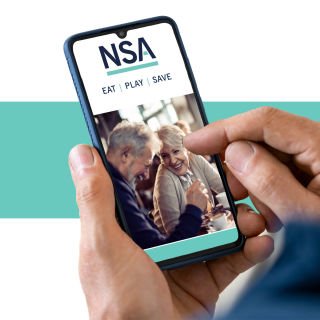
Thousands of Australia-wide discounts
Exclusive offers and savings across dining, shopping, gift cards, and more – all in the EAT | PLAY | SAVE app.

Members save 10% on Travel Insurance*
National Seniors members receive a 10% discount on travel insurance policies*.

Financial Information Consultant
Speak to a real person and receive up-to-date information on retirement planning, superannuation, and more!

Branches
Expand your social circle, enjoy social events, day trips, guest speakers, and meet like-minded members.

Exclusive Travel Discounts
Save on tours, cruises, and holidays with exclusive discounts on National Seniors Travel.

Our Generation Digital Magazine
Receive a yearly subscription to Our Generation Digital Magazine.

The Good Guys Commercial
Members enjoy exclusive access to The Good Guys Corporate Benefits. Save on small and large appliances as well as technology.
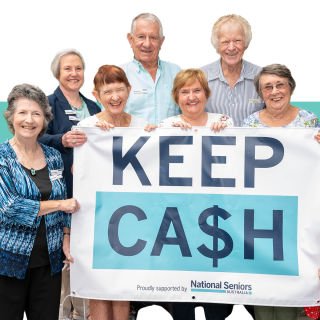
Advocacy & Research
Your membership directly funds our advocacy and research work fighting issues that affect you.

Competitions
Access exclusive member-only weekly competitions including books, DVDs, CDs, movie tickets and more.

Discounts
In addition to the discounts app, members can save thousands on eGift Cards and other discounted products.
*The discount applies to the total National Seniors travel insurance premium and is for National Seniors Australia members only. Discounts do not apply to the rate of GST and stamp duty or any changes you make to the policy. AGA has the discretion to withdraw or amend this discount offer at any time. This discount cannot be used in conjunction with any other promotional offer or discount.
National Seniors Australia Ltd ABN 89 050 523 003, AR 282736, is an authorised representative of AWP Australia Pty Ltd, ABN 52 097 227 177, AFSL 245631, trading as Allianz Global Assistance (AGA), and acts as AGA's agent and not as your agent. nib Travel Services (Australia) Pty Ltd (nib), ABN 81 115 932 173, AFSL 308461 acts as third party administrator on behalf of AGA, managing claims, complaints, enquiries and sales. This is general advice only. Before you buy, you should consider whether the product is appropriate for you, the Product Disclosure Statement (PDS), Financial Services Guide (FSG) and Target Market Determination (TMD) is available from us. This insurance is underwritten by Pacific International Insurance Pty Ltd, ABN 83 169 311 193, AFSL 523921.