Warning about impersonation scams
Authorities say these crimes are becoming more sophisticated.
Sponsored Story

Australians are being targeted by increasingly sophisticated impersonation scams, with criminals posing as banks, cryptocurrency providers and other trusted organisations to gain access to accounts.
New information from the Australian Federal Police (AFP) and Commonwealth Bank (CBA) shows scammers are refining their tactics, including copying bank hold music and coordinating calls to bypass security checks.
AFP Detective Superintendent, Marie Andersson, said offenders are becoming more organised and convincing in how they approach victims.
“Scammers approach victims armed and ready using secure information such as their name, date of birth, account details, and bank balances, acquired through previous cyber-attacks or data breaches,” she said.
“This allows scammers to build trust and legitimacy with their victim.”
Commonwealth Bank Executive General Manager of Group Fraud and Scams, James Roberts, said scammers were also becoming more convincing in how they communicate with customers.
“Scammers are getting better at sounding convincing, but there are a few simple things to remember that can help keep you safe,” he said.
Scammers posing as trusted contacts
Authorities say a growing tactic involves scammers presenting themselves as people trying to help protect accounts that have supposedly been compromised.
The Joint Policing Cybercrime Coordination Centre (JPC3), which brings together law enforcement and banking intelligence, said these scams often rely on building trust quickly before escalating pressure.
“Using information they gain through both conversations, they can then bypass security checks and create ‘proof’ that seems credible,” Det-Supt Andersson said.
How the scams typically unfold
Authorities say impersonation scams often follow a similar pattern designed to create urgency.
Common claims include:
Unauthorised transactions that need to be stopped
Accounts being locked or compromised
New payees added without permission
Instructions to move money to a “safe account”.
Once engaged, victims may be asked to:
Share one-time passcodes or passwords
Approve transactions in their banking app
Download software that gives remote access
Move money or cryptocurrency
Withdraw cash for collection.
Det-Supt Andersson said pressure is a key warning sign.
“Cold contact from a banking provider via call, text or email, combined with an extreme pressure to act quickly and hand over personal information, should be treated as a potential scam,” she said.
Losses continue to rise
According to the ACCC, reported combined losses to phishing scams – which include bank impersonation – reached $97.6 million in Australia in 2025, up from $84.5 million the previous year.
Authorities say phishing scams involve criminals impersonating trusted organisations to trick people into sharing information or approving transactions. Some are combined with remote access scams, where victims are asked to install software that allows scammers to control their device.
‘Banks won’t rush you’
Mr Roberts said while scams are becoming more convincing, the warning signs remain consistent.
“Banks won’t rush you – and we will never ask you to share passwords, PINs, or one-time codes, or move money to a ‘safe account’,” he said.
“If you get a call you’re unsure about, stop, hang up, and contact your bank using the number on your card or through the app.”

What to do if you’re unsure
Police and CBA are urging Australians to pause and verify any unexpected contact.
“Pause and consider the veracity of the request. If in doubt, hang up and call the banking institution’s official phone number,” Det-Supt Andersson said.
She said people should never:
Share passwords or codes
Click banking links in messages
Move money on instruction from an unexpected caller.
Authorities are encouraging people to report scams.
“Scams can affect anyone and you should not feel shame or embarrassment about reporting it,” she said.
If you're a customer and concerned you may have fallen victim to a scam, here’s how to contact CBA.
Additional anti-scam initiatives from CBA
CBA was the first bank to integrate and share information into a new “anti-scam intelligence loop”, making it faster to report and remove scams across banking, digital platforms, and telecommunications.
Its aim is to improve Australia’s “whole-of-ecosystem” approach to combatting scams, by being the first bank to integrate and share information into a new anti-scam intelligence loop (intel loop).
Co-designed by the Australian Financial Crimes Exchange (AFCX) and National Anti-Scam Centre (NASC), the intel loop means banks, telecommunications networks, internet service providers, and social media companies can share information on scams between themselves more easily – enabling faster action and greater protections.
CBA has a suite of anti-scam technology and collaborations aimed at helping protect customers from scams, including:
Working with cyber intelligence firm Apate.ai to harness near real-time scam intelligence and help protect Australians from harm
Sharing real-time behavioural and device-based intelligence with other banks to detect suspicious behaviour faster
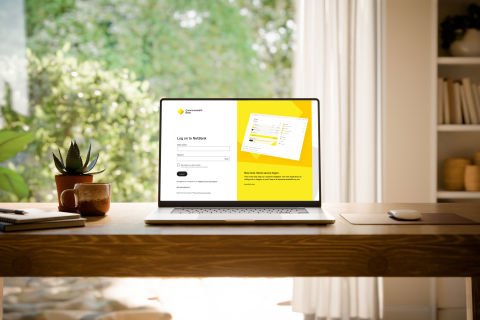
NetBank multi-factor authentication to help protect customers from common cybercrime threats, including online banking fraud
- A Gen AI Scam Checker tool in the Truyu app and online card transaction verification in the CommBank app
Scam Indicator technology conceived and developed in partnership with Quantium Telstra to help protect joint Telstra and CBA customers from phone scams
SMS scams intelligence sharing with Vodafone to help disrupt, detect, and proactively block suspected fraudulent payments from phishing SMS scams.
For more information on protecting yourself from scams and fraud, visit: commbank.com.au/commbanksafe.
Photo by Kampus Production/Pexels




Thousands of Australia-wide discounts
Exclusive offers and savings across dining, shopping, gift cards, and more – all in the EAT | PLAY | SAVE app.

Members save 10% on Travel Insurance*
National Seniors members receive a 10% discount on travel insurance policies*.

Financial Information Consultant
Speak to a real person and receive up-to-date information on retirement planning, superannuation, and more!

Branches
Expand your social circle, enjoy social events, day trips, guest speakers, and meet like-minded members.

Exclusive Travel Discounts
Save on tours, cruises, and holidays with exclusive discounts on National Seniors Travel.

Our Generation Digital Magazine
Receive a yearly subscription to Our Generation Digital Magazine.

The Good Guys Commercial
Members enjoy exclusive access to The Good Guys Corporate Benefits. Save on small and large appliances as well as technology.

Advocacy & Research
Your membership directly funds our advocacy and research work fighting issues that affect you.

Competitions
Access exclusive member-only weekly competitions including books, DVDs, CDs, movie tickets and more.

Discounts
In addition to the discounts app, members can save thousands on eGift Cards and other discounted products.
*The discount applies to the total National Seniors travel insurance premium and is for National Seniors Australia members only. Discounts do not apply to the rate of GST and stamp duty or any changes you make to the policy. AGA has the discretion to withdraw or amend this discount offer at any time. This discount cannot be used in conjunction with any other promotional offer or discount.
National Seniors Australia Ltd ABN 89 050 523 003, AR 282736, is an authorised representative of AWP Australia Pty Ltd, ABN 52 097 227 177, AFSL 245631, trading as Allianz Global Assistance (AGA), and acts as AGA's agent and not as your agent. nib Travel Services (Australia) Pty Ltd (nib), ABN 81 115 932 173, AFSL 308461 acts as third party administrator on behalf of AGA, managing claims, complaints, enquiries and sales. This is general advice only. Before you buy, you should consider whether the product is appropriate for you, the Product Disclosure Statement (PDS), Financial Services Guide (FSG) and Target Market Determination (TMD) is available from us. This insurance is underwritten by Pacific International Insurance Pty Ltd, ABN 83 169 311 193, AFSL 523921.