Hearing loss and dementia
Hearing health plays a vital role in healthy ageing, making regular hearing checks an important step in reducing dementia risk.
Sponsored Story
Key Points
Hearing loss is more common than many people realise, and it’s to impact 1 in 5 Australians by 2060.1
Hearing loss is linked to 32% chance of developing dementia.3
Up to 45% of dementia risk may be potentially preventable through addressing modifiable risk factors, making hearing health an important area for early action.5
Identifying hearing loss early through regular hearing checks can provide access to treatment and support options that help people stay connected, engaged and active.
Hearing loss is one of the most common health conditions associated with ageing. In Australia alone, hearing loss is expected to affect 1 in 5 Australians by 20601 making it a significant public health issue.
As people get older, hearing changes become a common part of life. Australian Government health information suggests that around half of people aged 60 to 70 experience hearing loss, increasing to approximately 70% of those aged 70 and over and 80% of those aged 80 and over.2
Despite its prevalence, many people delay seeking help because hearing changes often occur gradually and can be easy to dismiss as a normal part of getting older.
What’s becoming increasingly clear is that hearing health is about much more than just communication. Research has identified hearing loss as an important modifiable risk factor linked to dementia, placing it alongside other lifestyle and health factors that individuals can act on to support long-term cognitive wellbeing.
Hearing Australia’s Principal Audiologist Karen Hirschausen explains, “Research shows that unaddressed hearing loss is associated with a 32% higher risk of developing dementia.3 This relationship is thought to be driven by increased cognitive load, reduced auditory stimulation, and progressive social withdrawal.”
It is important to understand that hearing loss doesn’t directly cause dementia. Rather, researchers have identified a strong association between the two conditions, meaning that untreated hearing loss may contribute to circumstances that increase dementia risk over time.
Researchers continue to investigate why this relationship exists. One explanation is that when hearing becomes more difficult, the brain must work harder to process sounds and understand speech. This increased listening effort may leave fewer resources available for other cognitive functions like memory and attention.
Another theory focuses on social engagement. People who struggle to hear often find conversations more challenging, which can lead to loneliness, depression, and social isolation. These are all linked to a higher risk of dementia.4

This research is significant because hearing loss is one of the risk factors people can do something about. Unlike factors such as ageing or family history, hearing health can be assessed and monitored.
In fact, the World Health Organisation’s updated guidelines suggest that up to 45% of dementia risk may be potentially preventable by addressing modifiable risk factors,5 highlighting the importance of taking proactive steps where possible.
It’s easy for people to adapt to the changes without realising the impact on their daily lives. Many continue to hear sounds around them but find it increasingly difficult to follow conversations, especially when background noise is present.
Turning up the television, asking for repetition, avoiding busy venues, or paying closer attention to facial expressions during conversations can all be indicators that hearing may benefit from further attention.
Although these hearing changes may appear minor, struggling to hear shouldn’t simply be accepted as something you have to live with.
Addressing changes to hearing through early action becomes important, as it can help support communication, relationships and quality of life.
A free 15-minute adult hearing check is straightforward and can provide valuable information about hearing health. It can identify hearing changes that may otherwise go unnoticed.
As awareness of the hearing loss-dementia connection continues to grow, regular hearing checks are increasingly being recognised as a small action that may have a meaningful impact.
How Hearing Australia can help
For almost 80 years, Hearing Australia has been helping Australians hear better and reconnect with the people and moments that matter most.
Hearing Australia supports people with complex hearing needs, as well as those who simply want to understand whether their hearing has changed, through hearing assessments and free 15-minute adult hearing checks.
They’ve also been voted Australia's most trusted hearing services provider six years in a row by Reader's Digest’s readers.
References:
- Hearing Care Industry Association (2017), ‘The Social And Economic Cost Of Hearing Loss In Australia’, accessed on 06/10/26 @ hcia.com.au/wp-content/uploads/2023/08/Social-and-Economic-Cost-of-Hearing-Health-in-Australia_June-2017-3.pdf
- Australian Government Department of Health, Disability and Ageing, ‘About ear health’, accessed on 06/10/26 @ health.gov.au/topics/ear-health/about
- Readman, M. R. et al. (2025) 'Hearing loss as a risk factor for dementia: a systematic review and meta-analysis from a global perspective', Aging & Mental Health, 29(10), pp. 1831-1844. doi.org/10.1080/13607863.2025.2515180 (accessed on 21/10/25)
- Alzheimers Research UK, ‘Hearing loss and dementia risk explained’, accessed on 06/10/26 @ alzheimersresearchuk.org/dementia-information/dementia-risk/hearing-loss-and-dementia-risk
- World Health Organisation, ‘Up To 45% Of Dementia Risk Could Be Prevented Or Delayed’, accessed on 06 /10/26 @ who.int/news/item/15-07-2026-new-who-guidelines--up-to-45--of-dementia-risk-could-be-prevented-or-delayed
Disclaimer: This article is for information purposes only and should not be considered medical advice. Consult a registered healthcare professional about any health concerns or before making any changes to your medication, diet, or exercise routine.


Thousands of Australia-wide discounts
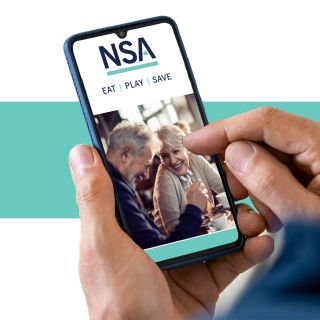
Exclusive offers and savings across dining, shopping, gift cards, and more – all in the EAT | PLAY | SAVE app.

Members save 10% on Travel Insurance*
National Seniors members receive a 10% discount on travel insurance policies*.

Financial Information Consultant
Speak to a real person and receive up-to-date information on retirement planning, superannuation, and more!

Branches
Expand your social circle, enjoy social events, day trips, guest speakers, and meet like-minded members.

Exclusive Travel Discounts
Save on tours, cruises, and holidays with exclusive discounts on National Seniors Travel.

Our Generation Digital Magazine
Receive a yearly subscription to Our Generation Digital Magazine.

The Good Guys Commercial
Members enjoy exclusive access to The Good Guys Corporate Benefits. Save on small and large appliances as well as technology.
Advocacy & Research
Your membership directly funds our advocacy and research work fighting issues that affect you.

Competitions
Access exclusive member-only weekly competitions including books, DVDs, CDs, movie tickets and more.

Discounts
In addition to the discounts app, members can save thousands on eGift Cards and other discounted products.
*The discount applies to the total National Seniors travel insurance premium and is for National Seniors Australia members only. Discounts do not apply to the rate of GST and stamp duty or any changes you make to the policy. AGA has the discretion to withdraw or amend this discount offer at any time. This discount cannot be used in conjunction with any other promotional offer or discount.
National Seniors Australia Ltd ABN 89 050 523 003, AR 282736, is an authorised representative of AWP Australia Pty Ltd, ABN 52 097 227 177, AFSL 245631, trading as Allianz Global Assistance (AGA), and acts as AGA's agent and not as your agent. nib Travel Services (Australia) Pty Ltd (nib), ABN 81 115 932 173, AFSL 308461 acts as third party administrator on behalf of AGA, managing claims, complaints, enquiries and sales. This is general advice only. Before you buy, you should consider whether the product is appropriate for you, the Product Disclosure Statement (PDS), Financial Services Guide (FSG) and Target Market Determination (TMD) is available from us. This insurance is underwritten by Pacific International Insurance Pty Ltd, ABN 83 169 311 193, AFSL 523921.