Budget doesn't fix inequality
Finance guru Noel Whittaker offers his thoughts on the Federal Budget and how it affects seniors.
Sponsored Story
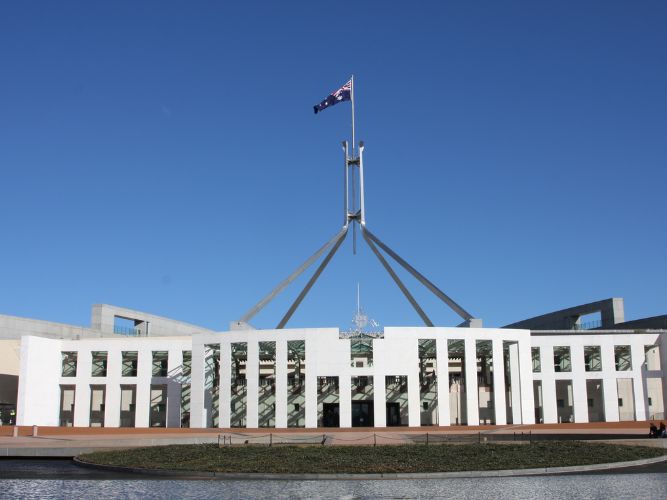
Last month Treasurer Jim Chalmers handed down what I think is becoming one of the most unpopular budgets in Australia’s history. He claimed the budget was about fixing intergenerational inequality and making housing more affordable for younger people.
Yes, young people have challenges, as young people always have, but so do older Australians.
Affordable housing is fast becoming a pipe dream for younger people and the budget does little to solve the supply problem, instead it focuses on raising taxes on investors.
A tax cut worth roughly $250 a year for younger workers is hardly going to help much when mortgage repayments keep climbing as interest rates rise.
The three main changes in the budget were about tax: capital gains tax, tax on family trusts, and changes to negative gearing. Let’s look at them one by one.
Capital Gains Tax (CGT)
CGT is the tax you pay when you sell an investment asset, such as property or shares, that has gone up in value since you bought it. It’s important to get expert advice, because the dates are critical. Under existing law, your profit (which is your taxable capital gain) is halved – that’s the 50% discount – provided you have held the asset for at least a year and a day. And the relevant date for CGT calculations is the sale contract date, not the date of settlement.
There is currently no special rate of tax on capital gains. The taxable capital gain, after adjustment for the discount, is simply added to your taxable income in the year the contract was signed. How much tax you pay then depends on what the rest of your taxable income is. The budget eliminates the 50% discount and replaces it with a tax of 30% on the net capital guide adjusted for indexation. Properties you hold now will retain the 50% discount system on gains made before 30 June 2027.
The government says the changes are grandfathered, but in my view, they are only partly grandfathered. Suppose you own a property now worth $800,000 that you bought 10 years ago for $400,000. If you sell by 30 June 2027, you will qualify for the current 50% CGT discount. If you sell after that date, the gain will be split into two parts – the period before 1 July 2027 and the period after.
To keep it simple, assume you bought a property eight years before 30 June 2027 and sold it two years later. Eight-tenths of the gain would be treated under the pre-2027 rules and two-tenths under the post-2027 rules. The taxable gain on the pre-2027 component would continue to receive the current discount, while the post-2027 component would be subject to the new rules.
It would also be prudent to obtain a valuation of the property as at 30 June 2027. That gives you a clear market value at the changeover date. Otherwise, you may be forced to rely on a notional gain calculated using the ATO's valuation tools and calculator. I appreciate this is complex, which is why expert advice is essential if you are even thinking about selling a CGT asset. The dates are critical, and getting them wrong could prove expensive.
Negative gearing
From 1 July 2027, losses relating to established residential investment properties purchased after budget night on 12 May 2026 will be only deductible against income or the capital gains from residential properties.
Any excess losses, which is normally the case with negative gearing, can be carried forward to offset only future residential property income. In other words, you won't get the tax deduction now, but you may get it later when the property becomes profitable. The exception is brand-new property, which will still qualify for negative gearing under the current rules.
This makes future residential investment less attractive. The key to success in property is buying well, ideally purchasing an undervalued property from a motivated seller and adding value over time.
In today’s market, with soaring construction costs and chronic labour and material shortages, only a brave investor would build a new property. In many cases, the only realistic option is a house in a cookie-cutter estate where every second property looks the same.
A better choice for many investors is an older home in an up-and-coming area, hoping location will drive future value. But there’s a problem: adding value often requires repairs and improvements.
If negative gearing on established properties disappears, those costs must be funded from after-tax dollars, with the owner hoping to recover the benefit later through capital growth. Who in their right mind would do that? I predict fewer investors, fewer rental properties and higher rents, with poorer Australians once again wearing the pain.

Discretionary Family Trusts
Many businesses are operated through discretionary family trusts because they allow income to be distributed among family members in a tax-effective way. Under the proposed changes, trust income will be taxed at a minimum rate of 30%, which will significantly reduce that flexibility.
To understand the impact, consider the current tax scales. The first $18,200 of taxable income is tax-free, and the next $26,800 is taxed at 16%. This means someone with taxable income of $45,000 pays only $4,288 in tax. If that same $45,000 were taxed at a flat 30%, the tax bill would be $13,500 – an increase of more than $9,000.
The impact can be reduced to some extent by distributing trust income among several beneficiaries. However, unless a beneficiary already has taxable income of $45,000 or more, there will generally be additional tax to pay under the proposed rules. The reason is that the current system generally allows beneficiaries to take advantage of the tax-free threshold and the lower tax rates that apply below $45,000.
Once a beneficiary's taxable income reaches $45,000, the 30% rate is largely irrelevant because any additional income is already taxed at 30% under the current tax scales. The biggest impact therefore falls on families who have traditionally distributed trust income to beneficiaries with little or no other taxable income. Anyone using a discretionary family trust should seek expert advice from their accountant. These rules are complex, and the tax consequences could be substantial if you get them wrong.
Private health insurance rebate
The decision to slash the private health insurance rebate for older Australians has been dressed up as “intergenerational equity”, but the reality is very different.
Older people who keep private health insurance actually save the government money because they help fund part of their own healthcare instead of relying entirely on the public system. That benefits every generation.
It makes economic sense to encourage pensioners and lower-income self-funded retirees to stay insured. Public hospitals already face massive waiting lists for elective surgery, and Australians are hardly likely to support extra charges to use them.
When more older Australians remain in the private system, there is less pressure on taxpayers and the public health system.
From 1 April 2027, a couple aged over 70 paying $7,000 a year in premiums could be around $830 worse off each year according to National Seniors Australia’s new rebate cut estimator.
Instead of carefully redesigning the rebate to keep older Australians insured, the government has taken a sledgehammer to the system.
The likely result? Tens of thousands of older Australians will drop their cover altogether, while those who remain face even higher premiums. Actuaries say it’ll cost public hospitals $547 million extra. So, they slugged the elderly, gutted private health, and lost money doing it.
Priorities!
The budget gives us a look into the government’s priorities. Nothing for poorer older people who rent and are not allowed to earn much money working, because of the way the Centrelink rules are arranged.

Disclaimer: This article and any links provided are for general information only and should not be taken as constituting professional advice. National Seniors Australia is not a financial adviser. You should consider seeking independent legal, financial, taxation, or other advice to check how any information provided relates to your unique circumstances.
Image sourced from Canva, used in accordance with Canva’s Content Licensing Agreement.




Thousands of Australia-wide discounts
Exclusive offers and savings across dining, shopping, gift cards, and more – all in the EAT | PLAY | SAVE app.

Members save 10% on Travel Insurance*
National Seniors members receive a 10% discount on travel insurance policies*.

Financial Information Consultant
Speak to a real person and receive up-to-date information on retirement planning, superannuation, and more!

Branches
Expand your social circle, enjoy social events, day trips, guest speakers, and meet like-minded members.

Exclusive Travel Discounts
Save on tours, cruises, and holidays with exclusive discounts on National Seniors Travel.

Our Generation Digital Magazine
Receive a yearly subscription to Our Generation Digital Magazine.

The Good Guys Commercial
Members enjoy exclusive access to The Good Guys Corporate Benefits. Save on small and large appliances as well as technology.

Advocacy & Research
Your membership directly funds our advocacy and research work fighting issues that affect you.

Competitions
Access exclusive member-only weekly competitions including books, DVDs, CDs, movie tickets and more.

Discounts
In addition to the discounts app, members can save thousands on eGift Cards and other discounted products.
*The discount applies to the total National Seniors travel insurance premium and is for National Seniors Australia members only. Discounts do not apply to the rate of GST and stamp duty or any changes you make to the policy. AGA has the discretion to withdraw or amend this discount offer at any time. This discount cannot be used in conjunction with any other promotional offer or discount.
National Seniors Australia Ltd ABN 89 050 523 003, AR 282736, is an authorised representative of AWP Australia Pty Ltd, ABN 52 097 227 177, AFSL 245631, trading as Allianz Global Assistance (AGA), and acts as AGA's agent and not as your agent. nib Travel Services (Australia) Pty Ltd (nib), ABN 81 115 932 173, AFSL 308461 acts as third party administrator on behalf of AGA, managing claims, complaints, enquiries and sales. This is general advice only. Before you buy, you should consider whether the product is appropriate for you, the Product Disclosure Statement (PDS), Financial Services Guide (FSG) and Target Market Determination (TMD) is available from us. This insurance is underwritten by Pacific International Insurance Pty Ltd, ABN 83 169 311 193, AFSL 523921.