The call of the wild
How Mal Leyland and other television pioneers inspired ordinary Aussies to see their own country.
For generations of Australians, some of the most powerful lessons about the natural world around us did not come from classrooms, but from our television screens.
Long before streaming services, drones, and AI-altered reality, a handful of pioneering broadcasters packed their cameras into four-wheel drives, boats, and light aircraft, then headed to places most Australians had never seen.
Names like Harry Butler, Ted Egan, Alby Mangels, and Steve Irwin became shorthand for a uniquely Australian storytelling tradition: practical, unpretentious, and driven by genuine wonder at the country itself.
Butler’s In the Wild brought outback flora and fauna into suburban lounge rooms in the 1970s, while Irwin later carried that same enthusiasm – especially for crocodiles – to a global audience.
Mangels’ World Safari films and series celebrated travel as a test of endurance as much as curiosity, and Egan used music, storytelling, and bush knowledge to bridge culture, history, and country.
These presenters didn’t just show Australians what the country looked like; they let us know that it was there for us all to explore.
Among the most influential were Mike and Mal Leyland, whose programs Ask the Leyland Brothers and earlier documentaries defined Australian travel television in the 1960s, ’70s, and early ’80s.
Viewers wrote in with their questions about our big country and the brothers went out and found the answers – often taking the track less travelled.
Their journeys took them across deserts, through floodplains, and into regions that were, at the time, rarely visited by ordinary travellers.
Their unpretentious manner, worn-out vehicles, bush camping, and problem-solving on the run were relatable and, for many of us, transformative.
Many Australians now in their senior years trace their love of independent travel directly back to those programs.
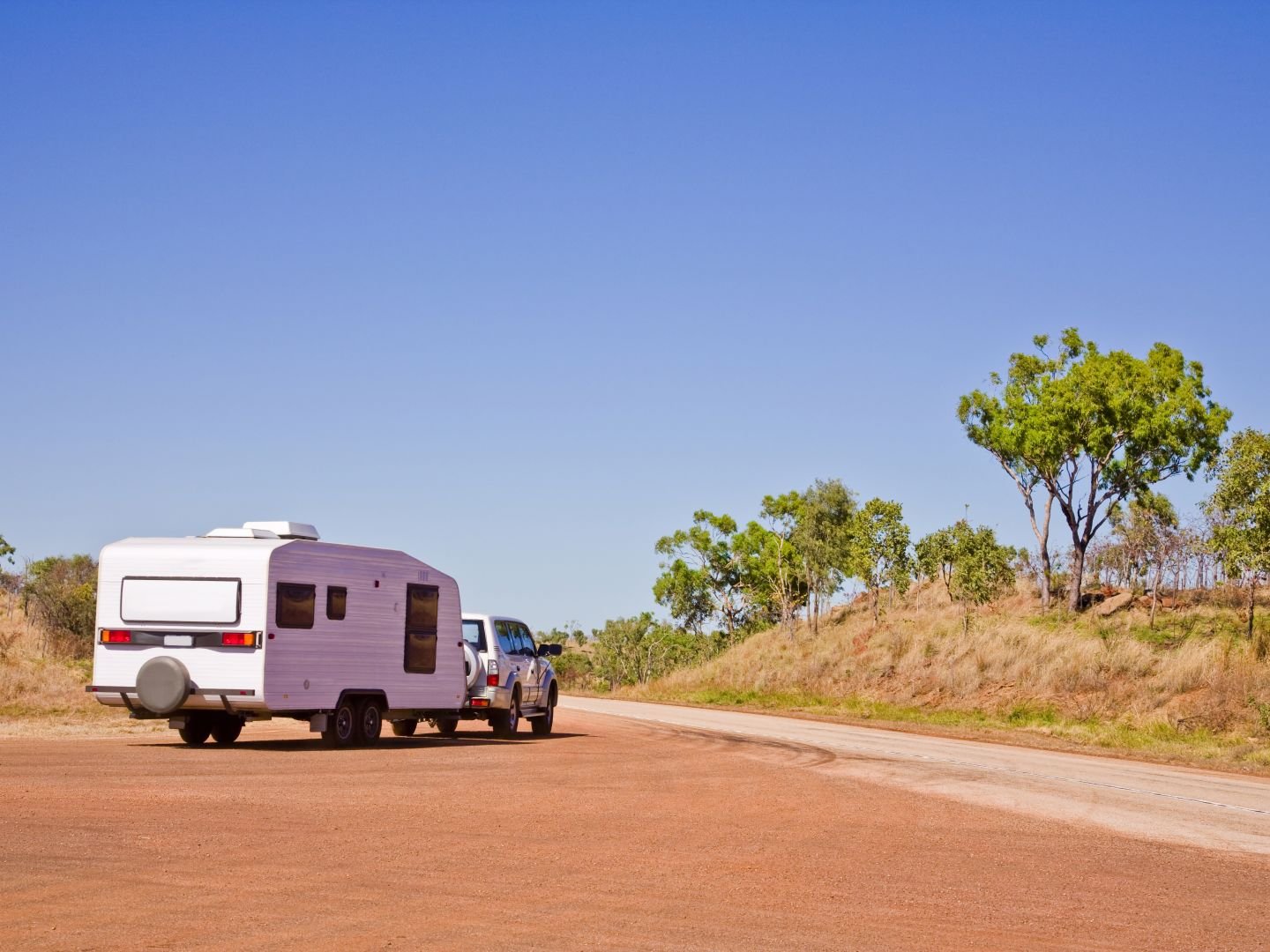
The modern phenomenon of the “grey nomad” – retirees setting off with caravans, campervans, or four-wheel drives to explore the continent – owes a lot to those early TV documentaries.

Mal Leyland’s new challenge
That legacy has come into sharp focus following the recent announcement by Mal Leyland, now in his early 80s, that he has been diagnosed with dementia.
In a March 2026 episode of the ABC’s Australian Story, Leyland spoke candidly about living with memory loss and about planning what he hopes will be one final journey across Australia, retracing the route that helped make the Leyland brothers famous.
Doctors diagnosed him several years ago, and he now lives with family support in Far North Queensland. Despite the progressive nature of the condition, Leyland remains deeply connected to his maps and the idea of the next road ahead. Planning, he has said, brings with it a sense of purpose and continuity of a lifetime spent exploring Australia.
The ABC profile revisits the brothers’ remarkable early achievements, including their 1960s crossing of the continent and their pioneering filming of remote landmarks, as well as the later difficulties that affected both their joint business and their personal relationship.
While those struggles are part of the historical record, the focus today is firmly on what they contributed: a shared national appetite for discovery.
The great gift to Australia from the Leylands and other early travel and wildlife documentary makers was not just entertainment. It was permission to wonder what lay beyond the horizon and inspiration to attempt a “bucket list” trip rather than postpone it.
Today’s grey nomads, quietly rolling out of suburban driveways and pointing their vehicles towards the unknown, are part of that legacy.
They may not carry heavy film equipment or aspire to earn a living telling tales of the bush, but like the Leylands, Butler, Mangels, Egan, and Irwin before them, they are still answering the same question: What’s out there?
Related reading: ABC on Mal Leyland, ABC Alby Mangels, Australian Screen, SLWA, Australia Zoo
Related viewing: Australian Story





Thousands of Australia-wide discounts
Exclusive offers and savings across dining, shopping, gift cards, and more – all in the EAT | PLAY | SAVE app.

Members save 10% on Travel Insurance*
National Seniors members receive a 10% discount on travel insurance policies*.

Financial Information Consultant
Speak to a real person and receive up-to-date information on retirement planning, superannuation, and more!

Branches
Expand your social circle, enjoy social events, day trips, guest speakers, and meet like-minded members.

Exclusive Travel Discounts
Save on tours, cruises, and holidays with exclusive discounts on National Seniors Travel.
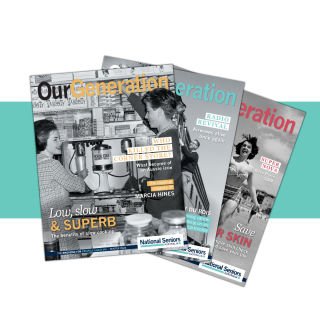
Our Generation Digital Magazine
Receive a yearly subscription to Our Generation Digital Magazine.

The Good Guys Commercial
Members enjoy exclusive access to The Good Guys Corporate Benefits. Save on small and large appliances as well as technology.
Advocacy & Research
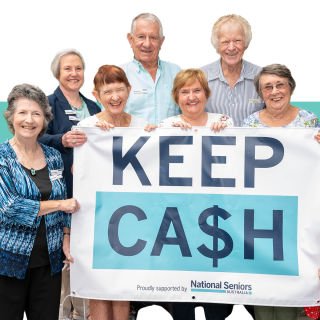
Your membership directly funds our advocacy and research work fighting issues that affect you.

Competitions
Access exclusive member-only weekly competitions including books, DVDs, CDs, movie tickets and more.

Discounts
In addition to the discounts app, members can save thousands on eGift Cards and other discounted products.
*The discount applies to the total National Seniors travel insurance premium and is for National Seniors Australia members only. Discounts do not apply to the rate of GST and stamp duty or any changes you make to the policy. AGA has the discretion to withdraw or amend this discount offer at any time. This discount cannot be used in conjunction with any other promotional offer or discount.
National Seniors Australia Ltd ABN 89 050 523 003, AR 282736, is an authorised representative of AWP Australia Pty Ltd, ABN 52 097 227 177, AFSL 245631, trading as Allianz Global Assistance (AGA), and acts as AGA's agent and not as your agent. nib Travel Services (Australia) Pty Ltd (nib), ABN 81 115 932 173, AFSL 308461 acts as third party administrator on behalf of AGA, managing claims, complaints, enquiries and sales. This is general advice only. Before you buy, you should consider whether the product is appropriate for you, the Product Disclosure Statement (PDS), Financial Services Guide (FSG) and Target Market Determination (TMD) is available from us. This insurance is underwritten by Pacific International Insurance Pty Ltd, ABN 83 169 311 193, AFSL 523921.