Three 'free' hours of power could leave you worse off
The government’s Solar Sharer electricity offer comes with a catch.
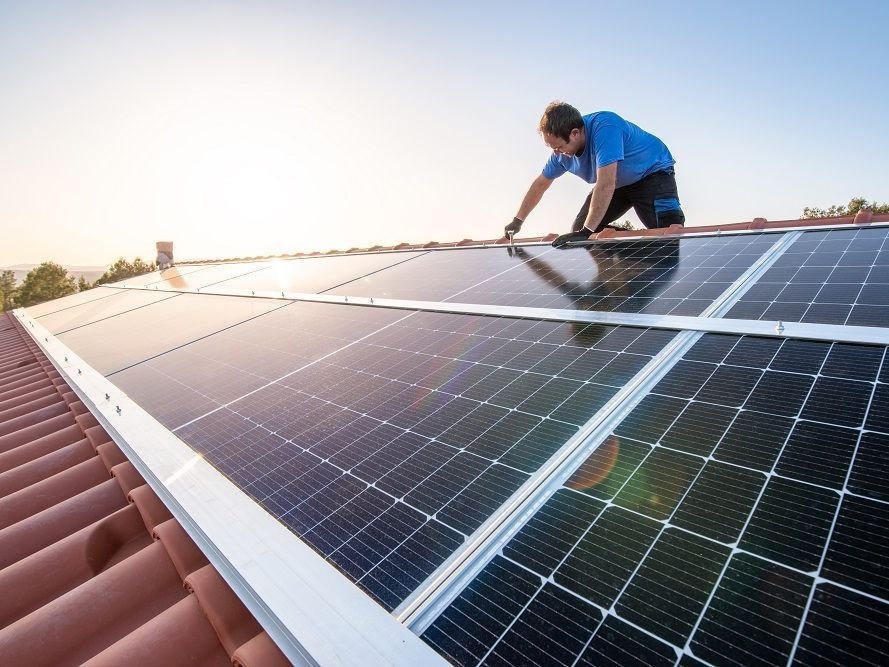
The government is promoting its new “Solar Sharer” schemes, which promise three “free” hours of power. But if consumers can’t shift enough of their electricity usage to the middle of the day, these plans could increase their electricity bills.
Solar Sharer Offers (SSO) are intended to spread the benefit of solar power to renters and other households without panels – since solar produces lots of power during the middle of the day, when demand is low. This is done through a $0 usage charge during three hours in the middle of the day – though the time period varies between plans.
While some similar plans were already available, there will be greater availability from 1 July 2026 in South-East Queensland, New South Wales, and South Australia – these areas were selected first in part because the Default Market Offer applies there.
“Families who run appliances like dishwashers, washing machines, pool pumps or hot water systems during the free power period may be able to save money on their bills,” said Minister for Climate Change and Energy, Chris Bowen.
Minister Bowen has said one group who could benefit from the Solar Sharer plans are electric vehicle (EV) owners, though the vehicle would have to be at home to charge during these hours. Another issue is that some of the plans charge for usage during the free hours above a certain level. For instance, only the first 24 kilowatt-hours are free on some plans – which might only half-charge an EV – with usage above this charged even though it is during the 'free hours'.
It is important to read the fine print. While the plans do include three hours of electricity during the middle of the day, prices at other times will be higher.
To save money under these plans households need to increase the amount of power they use during those three-hour windows. Otherwise, the free period will be offset by the higher prices at other times; or worse, the bill could even increase if they use more power during the evening.
Electricity plans vary widely across Australia, but as an example, the below uses prices in Sydney from Red Energy – which is owned by the federal government through the Snowy Hydro.
It stands out that the Solar Sharer plans are far more complicated.
The flat-rate plans have two main tariff prices: the daily supply charge and the usage charge.
The non-Solar Sharer time-of-use plans have a supply charge and charge three rates throughout weekdays and two on weekends – which are the same all year round.

But the Solar Sharer plans have a supply charge plus four prices throughout each day. These don’t apply on weekends but change with the “seasons” – with “summer” lasting for five months:
“Winter”: 1 June – 31 August, usage $0.00 - $0.6372 per kWh
“Temperate”: 1 September – 31 October, usage $0.00 - $0.2756 per kWh
“Summer”: 1 November – 31 March, usage $0.00 - $0.6372 per kWh
“Temperate”: 1 April – 31 May, usage $0.00 - $0.2756 per kWh
Not only do people need to recognise their usage during the day, but also what month of the year it is.
| Plan | Daily supply (per day) | Flat tariff usage (per kWh) | Time of use usage (per kWh - lowest | Time of use usage (per kWh) - Highest | Estimated cost per year |
|---|---|---|---|---|---|
| Living Energy Saver (Flat) | $0.9459 | $0.3251 | - | - | $2,130 |
| Standing Offer (Flat) | $1.6622 | $0.3314 | - | - | $2,420 |
| Standing Offer (TOU) | $1.3141 | - | $0.2548 | $0.5060 | $2,400 |
| Living Energy Saver (TOU) | $1.0093 | - | $0.2418 | $0.4824 | $2,170 |
| Solar Sharer Offer | $1.7641 | - | $0.0000 | $0.6372 | $2,470 |
Compared to other time-of-use plans in the same area, Solar Sharer plans have the highest daily supply charge and also the highest usage charge – which applies in the peak evening hours during “summer” and “winter”.
Energy Made Easy doesn’t account for people shifting their usage into the free three hours, which means if people can’t shift their usage they will pay more on these plans – based on medium 15 kWh/day usage typical for 2-3 people.
Compared to the flat tariff plan, which is also far simpler, the Solar Sharer schemes are $340 a year more expensive if people can’t shift their usage.
Just to break even, shifting usage from across the day would involve moving around 26% of usage, or 3.9 kWh, into the middle of the day. This is likely to be impractical for most households. It would be equivalent to using an oven for up to four hours, or running a load in a dishwasher, washing machine, and dryer – not just once, but every day.
Because the peak prices are higher, it is easier to break even by shifting power from the evening to the middle of the day. But it would still involve around 15% of daily usage, or 2.3 kWh.
This would be about two hours of using an oven, a load in a washing machine and dryer, or a bit over an hour of air-con. Again, every day.
If people can’t shift their usage, these plans could cost more than the standing offer plans – which are meant to protect people not engaged with their electricity plans.
On a flat tariff plan, what matters is how much electricity people use. But for time-of-use, and especially Solar Sharer, it also matters when electricity is used throughout the day. As shown above, the time-of-use rate in the evening can be more than double that of off-peak times.
Based on the pattern of usage for a summer weekday the regulators assumed prior to the introduction of Solar Sharer plans, the flat tariff and time-of-use plans are similar at $4.42 and $4.44 per day.
But if people don’t change their usage, the Solar Sharer plan would cost $5.57 – or 26% more, which could certainly add up across a year. Just to break even on these plans, people would need to shift around 30% of their usage from other times into the free hours.
The above plans are for the network in Sydney, but NSW has three different networks, and Queensland has two. In South-East Queensland such Solar Sharer schemes don't change the rates as often, but the daily supply charges can also be significantly higher.
Solar Sharer plans might suit some people – but they aren’t appropriate or possible for everyone. Knowing if you are better off under these plans requires a detailed understanding of how and when you use electricity and the different plans on offer.
National Seniors Australia (NSA) has been advocating against complicated power plans and argues everyone should have the option of a flat tariff plan. This is reinforced by research that the flat tariffs are often the cheapest option.
People considering Solar Sharer plans should carefully look at how much usage they can realistically shift into the free window, and how much more expensive power at other times will be.
Related reading: Minister’s statement 1; Minister’s statement 2




Thousands of Australia-wide discounts
Exclusive offers and savings across dining, shopping, gift cards, and more – all in the EAT | PLAY | SAVE app.

Members save 10% on Travel Insurance*
National Seniors members receive a 10% discount on travel insurance policies*.

Financial Information Consultant
Speak to a real person and receive up-to-date information on retirement planning, superannuation, and more!

Branches
Expand your social circle, enjoy social events, day trips, guest speakers, and meet like-minded members.

Exclusive Travel Discounts
Save on tours, cruises, and holidays with exclusive discounts on National Seniors Travel.

Our Generation Digital Magazine
Receive a yearly subscription to Our Generation Digital Magazine.

The Good Guys Commercial
Members enjoy exclusive access to The Good Guys Corporate Benefits. Save on small and large appliances as well as technology.
Advocacy & Research
Your membership directly funds our advocacy and research work fighting issues that affect you.

Competitions
Access exclusive member-only weekly competitions including books, DVDs, CDs, movie tickets and more.

Discounts
In addition to the discounts app, members can save thousands on eGift Cards and other discounted products.
*The discount applies to the total National Seniors travel insurance premium and is for National Seniors Australia members only. Discounts do not apply to the rate of GST and stamp duty or any changes you make to the policy. AGA has the discretion to withdraw or amend this discount offer at any time. This discount cannot be used in conjunction with any other promotional offer or discount.
National Seniors Australia Ltd ABN 89 050 523 003, AR 282736, is an authorised representative of AWP Australia Pty Ltd, ABN 52 097 227 177, AFSL 245631, trading as Allianz Global Assistance (AGA), and acts as AGA's agent and not as your agent. nib Travel Services (Australia) Pty Ltd (nib), ABN 81 115 932 173, AFSL 308461 acts as third party administrator on behalf of AGA, managing claims, complaints, enquiries and sales. This is general advice only. Before you buy, you should consider whether the product is appropriate for you, the Product Disclosure Statement (PDS), Financial Services Guide (FSG) and Target Market Determination (TMD) is available from us. This insurance is underwritten by Pacific International Insurance Pty Ltd, ABN 83 169 311 193, AFSL 523921.