Why many smoke alarms don’t wake older Australians
Research shows many traditional smoke alarms struggle to wake older sleepers. New low-frequency alarms are changing this.
Sponsored Story
Key points
Many Australians assume that if a smoke alarm goes off, it will wake them. Unfortunately, the evidence suggests that isn’t always the case.
Research over the past two decades has shown that the traditional high-frequency smoke alarm sound (around 3000 Hz) can be significantly less effective at waking some people – particularly older adults and children.
As we age, natural hearing changes often reduce our ability to detect higher frequencies, especially during sleep. This means that the very people most vulnerable during a house fire may not wake as quickly – or sometimes at all – when a conventional alarm sounds.
Sleep research conducted internationally, including work led by Australian sleep scientist, Professor Dorothy Bruck, has found that alarms using a 520 Hz low-frequency square-wave signal wake a far higher percentage of sleeping people, particularly those in deeper stages of sleep.
These findings have prompted growing discussion among fire safety researchers and safety organisations about how alarm technology can better protect households, especially where older people live independently.
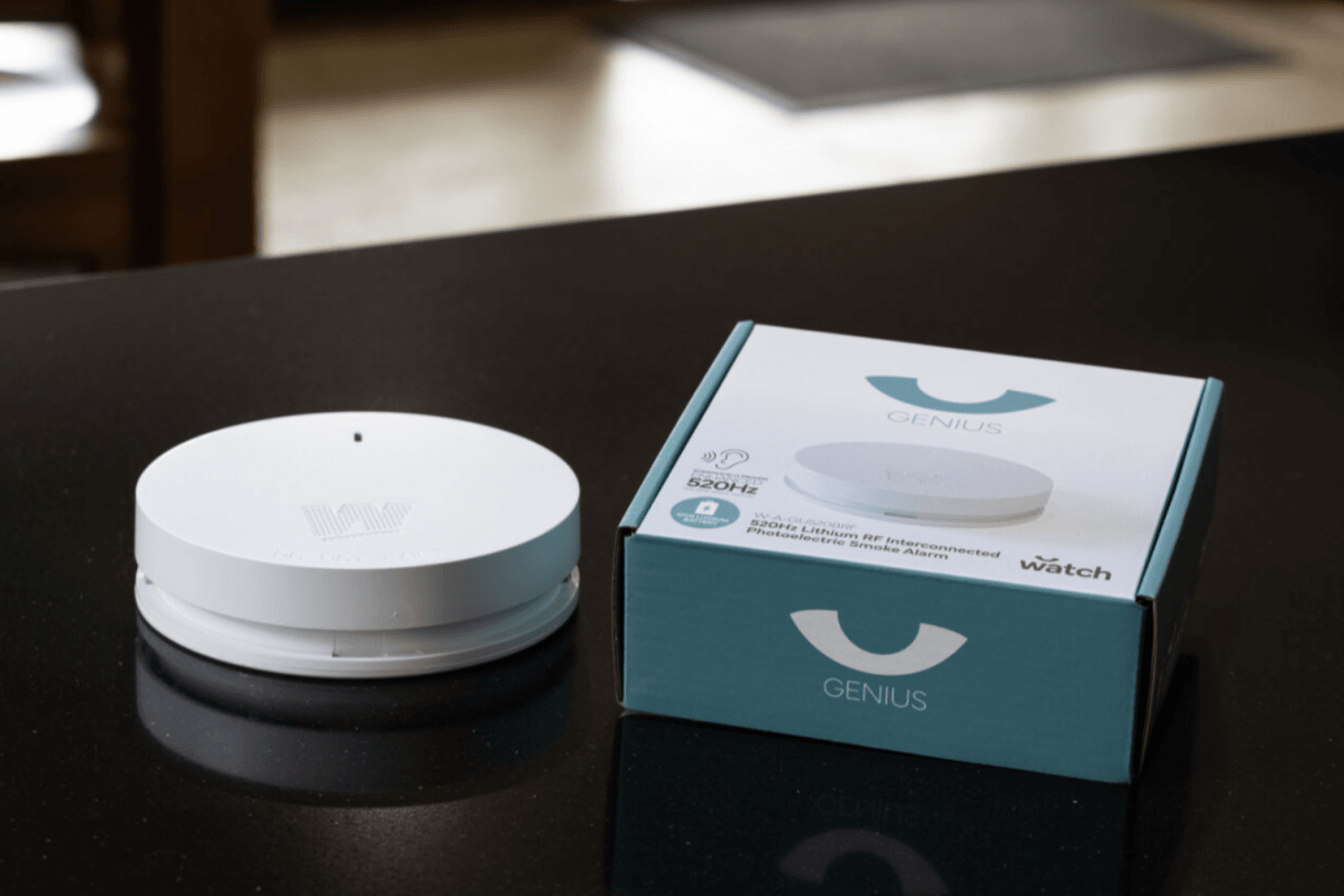
Now, a new smoke alarm is available to incorporate this low-frequency alert signal, specifically developed to improve the chances of waking sleeping occupants in an emergency.
For older Australians who wish to remain living safely and independently in their homes, understanding how different smoke alarm technologies work can be an important step in ensuring their home is properly prepared for a fire emergency.
Most Australians assume that if a smoke alarm sounds, it will wake them. However, research over the past two decades suggests that assumption may not always be correct – particularly for older adults.
Traditional smoke alarms typically use a high-frequency tone of around 3000 Hz. While this sound is loud, studies have shown it can be less effective at waking some people during sleep, especially as hearing changes with age.
For Australians who live independently later in life, this finding has important implications for home safety.
How hearing changes as we age
As we age, natural changes occur in our hearing. One of the most common changes is a gradual reduction in sensitivity to higher frequencies.
During the day this change may only be mildly noticeable. But during sleep, when the brain processes sound differently, it can significantly affect how quickly a person wakes to an alarm.
In practical terms, this means that some older adults may take longer to wake to traditional high-frequency smoke alarms.
Sleep depth also plays a role. Many people enter deeper sleep stages during the night, which can further reduce the likelihood of waking to certain sounds.
Alcohol, certain medications, and sleep aids can also deepen sleep and slow the body’s response to alarms. These factors are common in many households and can further reduce the likelihood of waking quickly during an emergency.
Because early warning is critical in a fire emergency, researchers began studying whether different alarm signals could improve wake-up effectiveness.
What the research found
International research examining alarm signals during sleep has produced some striking findings.
Studies led by Australian sleep researcher, Professor Dorothy Bruck, examined how sleeping people respond to different alarm sounds.
The research found that traditional high-frequency smoke alarms were sometimes significantly less effective at waking sleeping participants.
However, when the alarm signal was changed to a 520 Hz low-frequency square-wave tone, wake-up performance improved dramatically.
In several trials, participants were two to three times more likely to wake to the low-frequency signal compared with the traditional high-frequency alarm.
Participants also woke faster and were more likely to become fully alert.
Findings have important implications for older adults. Age-related hearing changes often make higher-frequency sounds harder to detect, particularly during sleep.
For older sleepers, a lower-frequency signal can be easier for the brain to recognise as an urgent alert.
Why this matters for older Australians living independently
Australia has one of the highest rates of independent living among older people in the world. Many Australians prefer to remain safely in their homes well into later life.
Smoke alarms remain one of the most important life-saving devices in any home. Their purpose is simple – to provide early warning so occupants can escape safely.
However, if an alarm cannot reliably wake someone during sleep, the benefit of that early warning is reduced.
For older Australians living alone, or for families supporting ageing parents who remain in their own homes, understanding the difference between smoke alarm technologies can make an important difference.

New alarm technology designed to improve wake-up effectiveness
As sleep research has progressed, new smoke alarm designs have begun incorporating the 520 Hz low-frequency signal identified in these studies.
In Australia, Watch Smoke Alarms says it is the only company currently producing smoke alarms for typical residential dwellings that incorporate this low-frequency alert signal.
A company spokesperson said its Genius 520 Hz smoke alarm was developed to apply the findings from sleep research, using the lower-frequency tone designed to improve the chances of waking sleeping occupants in a fire emergency.
Like any smoke alarm, the device detects smoke and provides an alert. The key difference lies in the sound it produces – a lower-frequency signal designed specifically to be more effective at waking sleeping people.
For households with older residents, this technology provides an additional layer of protection focused on one critical outcome – waking in time to escape.
A small change that can make a big difference
Fire safety experts consistently emphasise that early detection saves lives and ensuring smoke alarms are installed correctly, interconnected throughout the home and tested regularly remains essential.
But as research continues to improve our understanding of how people respond during sleep, alarm technology is also evolving.
For older Australians planning to remain living safely in their homes, reviewing the type of smoke alarm installed may be one of the simplest ways to improve household safety.
Because when a fire occurs at night, the most important thing a smoke alarm can do is the one thing that matters most.
Wake you.
Visit Watch Smoke Alarms or email sales@watchsmokealarms.com.au to learn how the Genius 520 Hz alarm is designed to wake sleeping occupants and improve home fire safety or call 1300 508 930 and speak to one of their customer advisors.
Disclaimer: This content includes sponsored advertising which helps fund our important advocacy work. Please note that the information provided and opinions expressed in this advertising material are solely those of the advertiser. We encourage you to carefully evaluate and consider any advertised offering before making a purchase. Any transactions or interactions between you and the advertiser are solely between you and the advertiser.

Thousands of Australia-wide discounts
Exclusive offers and savings across dining, shopping, gift cards, and more – all in the EAT | PLAY | SAVE app.
Members save 10% on Travel Insurance*
National Seniors members receive a 10% discount on travel insurance policies*.

Financial Information Consultant
Speak to a real person and receive up-to-date information on retirement planning, superannuation, and more!

Branches
Expand your social circle, enjoy social events, day trips, guest speakers, and meet like-minded members.

Exclusive Travel Discounts
Save on tours, cruises, and holidays with exclusive discounts on National Seniors Travel.

Our Generation Digital Magazine
Receive a yearly subscription to Our Generation Digital Magazine.

The Good Guys Commercial
Members enjoy exclusive access to The Good Guys Corporate Benefits. Save on small and large appliances as well as technology.

Advocacy & Research
Your membership directly funds our advocacy and research work fighting issues that affect you.

Competitions
Access exclusive member-only weekly competitions including books, DVDs, CDs, movie tickets and more.

Discounts
In addition to the discounts app, members can save thousands on eGift Cards and other discounted products.
*The discount applies to the total National Seniors travel insurance premium and is for National Seniors Australia members only. Discounts do not apply to the rate of GST and stamp duty or any changes you make to the policy. AGA has the discretion to withdraw or amend this discount offer at any time. This discount cannot be used in conjunction with any other promotional offer or discount.
National Seniors Australia Ltd ABN 89 050 523 003, AR 282736, is an authorised representative of AWP Australia Pty Ltd, ABN 52 097 227 177, AFSL 245631, trading as Allianz Global Assistance (AGA), and acts as AGA's agent and not as your agent. nib Travel Services (Australia) Pty Ltd (nib), ABN 81 115 932 173, AFSL 308461 acts as third party administrator on behalf of AGA, managing claims, complaints, enquiries and sales. This is general advice only. Before you buy, you should consider whether the product is appropriate for you, the Product Disclosure Statement (PDS), Financial Services Guide (FSG) and Target Market Determination (TMD) is available from us. This insurance is underwritten by Pacific International Insurance Pty Ltd, ABN 83 169 311 193, AFSL 523921.