Cash is here to stay
Demand for a mix of payment options is expected to continue for the foreseeable future.

A new report confirms that many Australians, especially seniors, favour cash over digital payments for important transactions.
While the use of digital money apps is accelerating globally, cash is still expected to account for 9% of all payments in Australia by 2030.
That figure rises to nearly 20% for Australians aged 55 and above, with seniors saying cash is their most frequent in-store payment method.
The Global Payment Report 2026 suggests the sustained interest in cash use is driven by increases in the cost of living.
The report reflects previous research and concerns among older Australians that gave rise to the successful National Seniors Australia (NSA) Keep Cash campaign and the Federal Government’s cash mandate.
Many of us are turning to physical money to control spending, with cash offering a tangible way to stick to limits and avoid overspending on tap-and-go purchases.
Older Australians have long relied on cash as a budgeting tool and seem set to do so for the foreseeable future.
The Reserve Bank of Australia’s 2025 Consumer Payments Survey noted that about half of Australians still use cash in a typical week, and it accounts for roughly 15% of all transactions.
Crucially, usage is higher among people aged 65 and over, as well as those on lower incomes. These are the groups more likely to feel financial pressure and value strict budget control.

The Global Payments Report suggests that the future of payments is not strictly cashless but hybrid. While digital methods dominate growth, cash continues to serve as a complementary option.
For businesses, continuing to accept cash alongside newer forms of payment means meeting the needs of all their customers.
For seniors, the appeal of cash extends beyond budgeting. Many prefer it for its simplicity, reliability, and security.
Cash transactions do not rely on internet access or digital literacy, which can be barriers for older Australians. There are also concerns about scams and privacy, with physical currency offering anonymity and reducing exposure to fraud.
Additionally, cash serves as a backup during outages or emergencies, reinforcing its role as a trusted and resilient payment method.
As NSA CEO, Chris Grice, says, “Since July 2024, NSA has been championing the need to keep cash accessible and accepted. Not all seniors are comfortable using debit or credit cards, or banking online, because they’re not tech-savvy, they’re fearful of potential scams, and cash is what they’ve always known.
“Furthermore, doing any business online comes with problems and risks. In emergency situations and during outages, when electronic systems crash, cash plays a vital role. And in these times of global uncertainty, it also provides security.”
If you want to know more about NSA’s advocacy in this area, read about our partnership with atmx, get free “Keep Cash” and “We Accept Cash” stickers, and join the Keep Cash campaign, click here.
Related reading: News, Global Payments, RBA




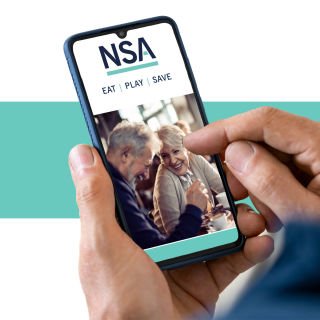
Thousands of Australia-wide discounts
Exclusive offers and savings across dining, shopping, gift cards, and more – all in the EAT | PLAY | SAVE app.

Members save 10% on Travel Insurance*
National Seniors members receive a 10% discount on travel insurance policies*.

Financial Information Consultant
Speak to a real person and receive up-to-date information on retirement planning, superannuation, and more!

Branches
Expand your social circle, enjoy social events, day trips, guest speakers, and meet like-minded members.

Exclusive Travel Discounts
Save on tours, cruises, and holidays with exclusive discounts on National Seniors Travel.

Our Generation Digital Magazine
Receive a yearly subscription to Our Generation Digital Magazine.

The Good Guys Commercial
Members enjoy exclusive access to The Good Guys Corporate Benefits. Save on small and large appliances as well as technology.

Advocacy & Research
Your membership directly funds our advocacy and research work fighting issues that affect you.

Competitions
Access exclusive member-only weekly competitions including books, DVDs, CDs, movie tickets and more.

Discounts
In addition to the discounts app, members can save thousands on eGift Cards and other discounted products.
*The discount applies to the total National Seniors travel insurance premium and is for National Seniors Australia members only. Discounts do not apply to the rate of GST and stamp duty or any changes you make to the policy. AGA has the discretion to withdraw or amend this discount offer at any time. This discount cannot be used in conjunction with any other promotional offer or discount.
National Seniors Australia Ltd ABN 89 050 523 003, AR 282736, is an authorised representative of AWP Australia Pty Ltd, ABN 52 097 227 177, AFSL 245631, trading as Allianz Global Assistance (AGA), and acts as AGA's agent and not as your agent. nib Travel Services (Australia) Pty Ltd (nib), ABN 81 115 932 173, AFSL 308461 acts as third party administrator on behalf of AGA, managing claims, complaints, enquiries and sales. This is general advice only. Before you buy, you should consider whether the product is appropriate for you, the Product Disclosure Statement (PDS), Financial Services Guide (FSG) and Target Market Determination (TMD) is available from us. This insurance is underwritten by Pacific International Insurance Pty Ltd, ABN 83 169 311 193, AFSL 523921.