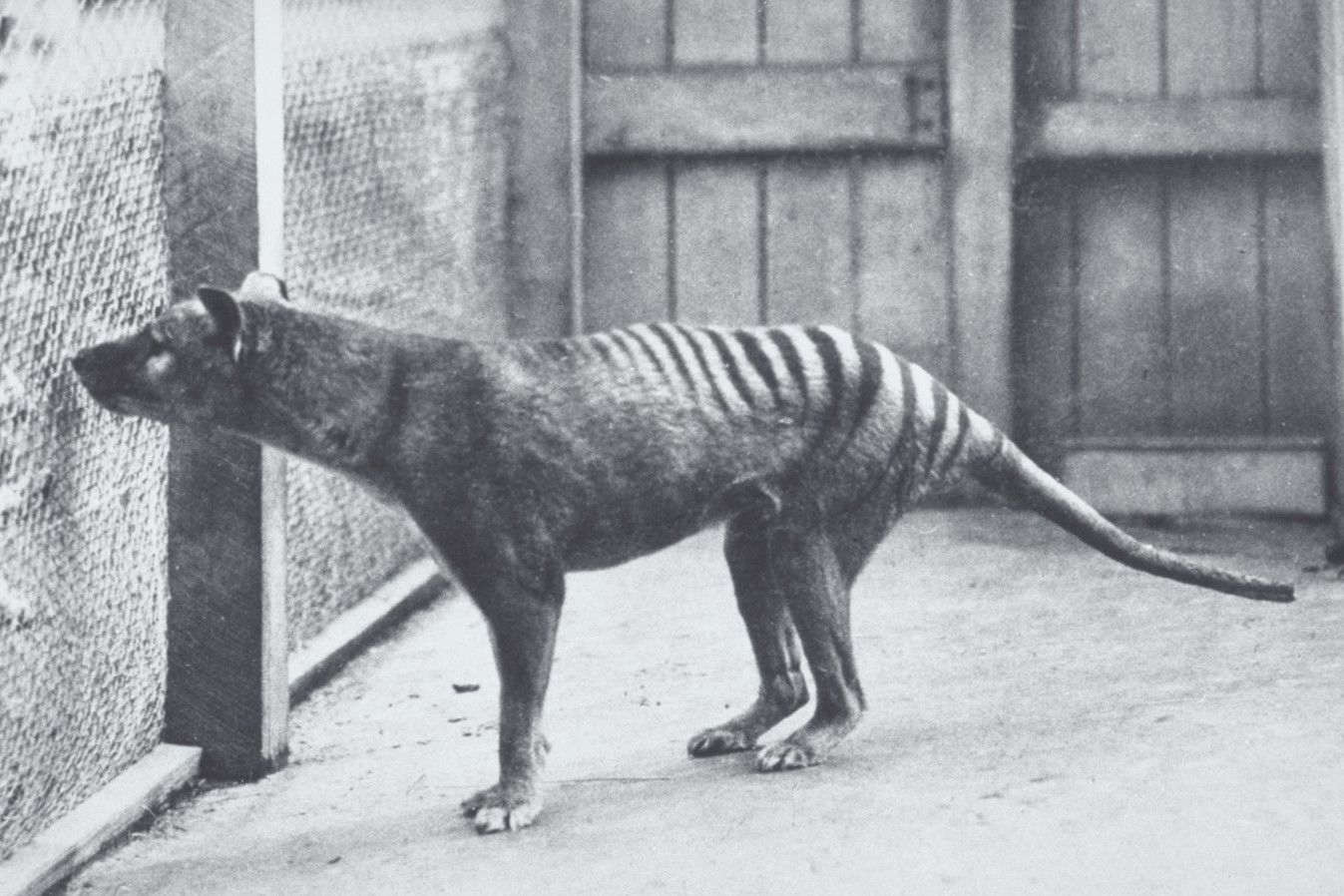
Species face the fate of the thylacine
Thousands of Australian species, including a once-common bird, are under threat.
The vibrant, sapphire-blue plumage of the superb fairy-wren is a staple of Australian gardens, yet researchers have warned that this beloved bird may soon be gone forever.
Leading ornithologists say that extreme weather – specifically sudden cold snaps following unseasonably warm autumns – has devastated local populations.
In some monitored regions, such as Canberra’s Australian National Botanic Gardens, the mortality rate exceeded 50% in a single season, marking a terrifying acceleration toward local extinction for a species once considered common.
The plight of the fairy-wren is not an isolated incident; it is a microcosm of a global biological collapse. Over the past 50 years, the Earth has entered what some scientists call the “sixth mass extinction”.
Unlike previous extinctions caused by asteroids or volcanic activity, this one seems to be driven almost entirely by human intervention through habitat destruction, pollution, and climate change.
Australia has a sombre history of losing its unique fauna. Perhaps the most famous example is the thylacine, or Tasmanian tiger. Once the world’s largest carnivorous marsupial, the thylacine was hunted to extinction following misplaced fears about livestock predation and habitat loss. The last known individual died in captivity in 1936. Today, the thylacine serves as a haunting reminder of how quickly a dominant, specialised species can vanish when human pressures become unsustainable.

According to the World Wildlife Fund’s (WWF) Living Planet Report 2024, there has been a catastrophic 73% average decline in the size of monitored wildlife populations between 1970 and 2020.
This index, which tracks mammals, birds, fish, reptiles, and amphibians, highlights that we are losing the density and diversity of life at a rate that threatens the very ecosystems humans rely on for clean water, pollination, and stable climates.
The International Union for Conservation of Nature “Red List” provides a more specific look at species said to be on the verge of extinction.
Currently, more than 48,600 species are threatened with extinction, representing 28% of all assessed species. The numbers are staggering when broken down by category: 41% of amphibians, 26% of mammals, and 11.5% of birds are currently at risk.
Plants are equally vulnerable, with 38% of assessed trees and 34% of conifers reportedly facing disappearance.
The potential loss of a single species such as the superb fairy-wren ripples through the environment. These birds are essential insect controllers and part of a complex food web. When common species begin to vanish, it signals that the environment’s resilience is fractured.
Without urgent intervention to protect habitats, the song of the fairy-wren may soon be nothing more than a memory.
Related reading: ABC, National Museum, WWF, IUCN

Photograph by Harry Burrell. Sourced from the Australian Museum Archives. See more here.




Thousands of Australia-wide discounts
Exclusive offers and savings across dining, shopping, gift cards, and more – all in the EAT | PLAY | SAVE app.

Members save 10% on Travel Insurance*
National Seniors members receive a 10% discount on travel insurance policies*.

Financial Information Consultant
Speak to a real person and receive up-to-date information on retirement planning, superannuation, and more!

Branches
Expand your social circle, enjoy social events, day trips, guest speakers, and meet like-minded members.

Exclusive Travel Discounts
Save on tours, cruises, and holidays with exclusive discounts on National Seniors Travel.

Our Generation Digital Magazine
Receive a yearly subscription to Our Generation Digital Magazine.

The Good Guys Commercial
Members enjoy exclusive access to The Good Guys Corporate Benefits. Save on small and large appliances as well as technology.

Advocacy & Research
Your membership directly funds our advocacy and research work fighting issues that affect you.

Competitions
Access exclusive member-only weekly competitions including books, DVDs, CDs, movie tickets and more.

Discounts
In addition to the discounts app, members can save thousands on eGift Cards and other discounted products.
*The discount applies to the total National Seniors travel insurance premium and is for National Seniors Australia members only. Discounts do not apply to the rate of GST and stamp duty or any changes you make to the policy. AGA has the discretion to withdraw or amend this discount offer at any time. This discount cannot be used in conjunction with any other promotional offer or discount.
National Seniors Australia Ltd ABN 89 050 523 003, AR 282736, is an authorised representative of AWP Australia Pty Ltd, ABN 52 097 227 177, AFSL 245631, trading as Allianz Global Assistance (AGA), and acts as AGA's agent and not as your agent. nib Travel Services (Australia) Pty Ltd (nib), ABN 81 115 932 173, AFSL 308461 acts as third party administrator on behalf of AGA, managing claims, complaints, enquiries and sales. This is general advice only. Before you buy, you should consider whether the product is appropriate for you, the Product Disclosure Statement (PDS), Financial Services Guide (FSG) and Target Market Determination (TMD) is available from us. This insurance is underwritten by Pacific International Insurance Pty Ltd, ABN 83 169 311 193, AFSL 523921.