Star’s diagnosis shines light on lung cancer
The crooner who found fame with Mandy, Copacabana, and I Write the Songs urges his fans to seek advice if they have respiratory difficulties.

Just before Christmas, 82-year-old entertainer Barry Manilow revealed that he is battling early-stage lung cancer, forcing him to postpone several concerts.
After suffering from bronchitis for 11 weeks, Manilow had an MRI that uncovered a cancerous spot on his left lung. He said the tumour was detected at stage one, meaning it was localised and probably hadn’t spread.
Manilow underwent surgery in late December, and his doctors hope he will recover without chemotherapy or radiation.
He has urged fans to seek medical advice for any persistent respiratory symptoms, stressing the importance of early detection.
Lung cancer remains one of Australia’s most serious health challenges. About 15,000 Australians are diagnosed with the disease each year, and nearly 9,000 will die from it.
Despite recent advances in treatment, the overall five-year survival rate is about 27%. For older Australians, the risk is even higher, as cancer incidence and mortality increase significantly with age.

One of the difficulties with lung cancer is that it often develops silently. Symptoms can be subtle at first, but warning signs include a persistent cough lasting more than three weeks, breathlessness, chest or shoulder pain, repeated chest infections, coughing blood, fatigue, and unexplained weight loss.
While smoking remains the leading cause, non-smokers are not immune, and environmental factors such as exposure to pollutants can play a role.
Diagnosis typically begins with imaging tests such as chest X-rays and CT scans, followed by a biopsy to confirm the cancer type. Most cases fall into two categories: non-small cell lung cancer, which accounts for about 85% of diagnoses, and small cell lung cancer.
Treatment options vary depending on the stage and type but may include surgery, radiotherapy, chemotherapy, targeted therapies, or immunotherapy. For early-stage cases such as Manilow’s, surgery can be curative.
Early detection is critical. People at higher risk, particularly older adults with a history of smoking, should discuss screening options with their doctor.
The National Lung Cancer Screening Program offers low-dose CT scans for eligible patients. Preventive measures such as quitting smoking, maintaining a healthy lifestyle, and reducing exposure to indoor pollutants can also lower your risk.
Persistent respiratory symptoms should never be ignored. Resources such as HealthDirect and the Lung Foundation Australia provide guidance, symptom checkers, and support services to help you take proactive steps toward lung health.
Related reading: Hollywood Reporter, Cancer Australia, HealthDirect, Lung Foundation Australia

PHOTO BY MATTHEW BECKER - www.melodicrockconcerts.com - matt@melodicrockconcerts.com / Weatherman90 at en.wikipedia
Disclaimer: This article is for information purposes only and should not be considered medical advice. Consult a healthcare professional about any health concerns or before making any changes to your medication, diet, or exercise routine.


Thousands of Australia-wide discounts
Exclusive offers and savings across dining, shopping, gift cards, and more – all in the EAT | PLAY | SAVE app.

Members save 10% on Travel Insurance*
National Seniors members receive a 10% discount on travel insurance policies*.

Financial Information Consultant
Speak to a real person and receive up-to-date information on retirement planning, superannuation, and more!

Branches
Expand your social circle, enjoy social events, day trips, guest speakers, and meet like-minded members.

Exclusive Travel Discounts
Save on tours, cruises, and holidays with exclusive discounts on National Seniors Travel.

Our Generation Digital Magazine
Receive a yearly subscription to Our Generation Digital Magazine.

The Good Guys Commercial
Members enjoy exclusive access to The Good Guys Corporate Benefits. Save on small and large appliances as well as technology.
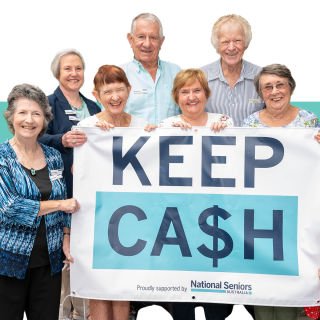
Advocacy & Research
Your membership directly funds our advocacy and research work fighting issues that affect you.

Competitions
Access exclusive member-only weekly competitions including books, DVDs, CDs, movie tickets and more.

Discounts
In addition to the discounts app, members can save thousands on eGift Cards and other discounted products.
*The discount applies to the total National Seniors travel insurance premium and is for National Seniors Australia members only. Discounts do not apply to the rate of GST and stamp duty or any changes you make to the policy. AGA has the discretion to withdraw or amend this discount offer at any time. This discount cannot be used in conjunction with any other promotional offer or discount.
National Seniors Australia Ltd ABN 89 050 523 003, AR 282736, is an authorised representative of AWP Australia Pty Ltd, ABN 52 097 227 177, AFSL 245631, trading as Allianz Global Assistance (AGA), and acts as AGA's agent and not as your agent. nib Travel Services (Australia) Pty Ltd (nib), ABN 81 115 932 173, AFSL 308461 acts as third party administrator on behalf of AGA, managing claims, complaints, enquiries and sales. This is general advice only. Before you buy, you should consider whether the product is appropriate for you, the Product Disclosure Statement (PDS), Financial Services Guide (FSG) and Target Market Determination (TMD) is available from us. This insurance is underwritten by Pacific International Insurance Pty Ltd, ABN 83 169 311 193, AFSL 523921.