The beginning of an era
It’s been a long time between visits, but humans are ready to return to the Moon with a plan to stay a lot longer and venture even further into space.
Where were you in 1969?
Many older Australians can remember exactly where they were when Neil Armstrong took his “one small step” on the Moon at 12.56pm AEST on 21 July 1969.
Some Australians played a critical role in the mission by providing essential tracking and receiving live television signals of the first moonwalk.
NASA’s Honeysuckle Creek station near Canberra transmitted the first historic images, with significant support from the Parkes radio telescope and the Tidbinbilla tracking station.
But what about you? Chances are you were at home, in the classroom, or at your workplace, watching a flickering black‑and‑white television as history unfolded before your eyes.
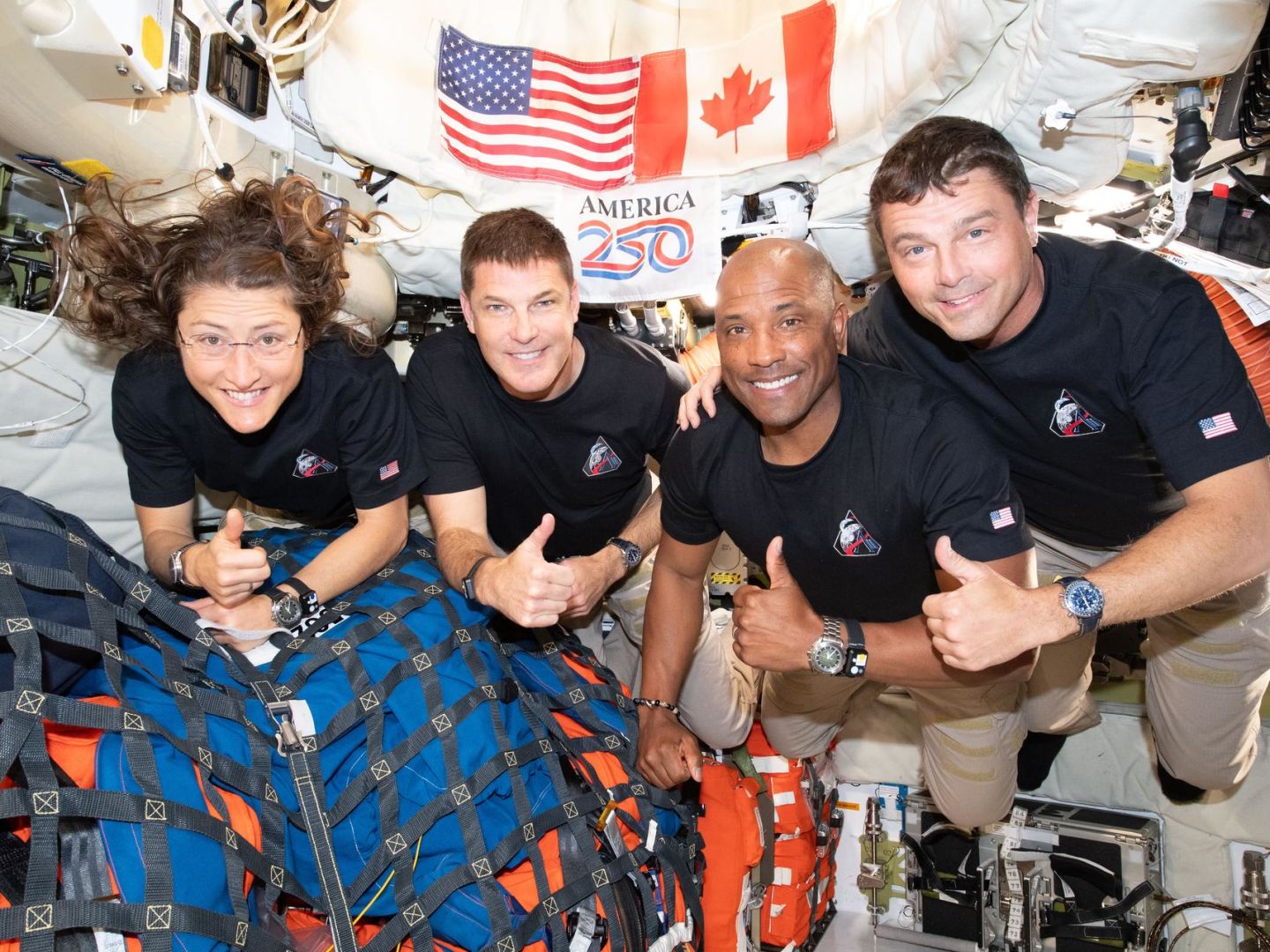
When the four astronauts of NASA’s Artemis II mission splashed down safely in the Pacific last weekend, it marked more than the end of a successful spaceflight.
It was a new chapter in a story that began over half a century ago, when the Apollo astronauts went to the Moon.
Once again, humanity has ventured beyond Earth’s orbit and come back safely.
Like Apollo 8 in December 1968, Artemis II did not land. Instead, it carried its crew around the far side of the Moon and back to Earth, testing a new spacecraft and giving astronauts their first close view of the lunar surface in more than 50 years.
Apollo 8 proved it was possible; Artemis II proved we can do it again, but this time with more modern technology, international cooperation, and a broader vision.
There were many echoes from the Apollo era. Artemis II launched from the same historic Launch Complex 39B in Florida that sent Apollo astronauts skyward in the 1960s and early ’70s.

The feelings reported by the crew – wonder and humility seeing Earth as a fragile blue outpost in the vast emptiness of space – strongly recalled the famous “Earthrise” moment that moved a generation during Apollo 8.
Yet there were important differences, too. This crew included the first woman, the first person of colour, and the first Canadian to travel so far from Earth, reflecting a world very different from that of the Cold War space race.
Most significantly, Artemis II was never meant to be a one‑off. The Apollo missions were extraordinary achievements, but they were brief visits.
This time, NASA and its partners are working towards a permanent human presence on the Moon. Plans now focus on building infrastructure near the lunar south pole, where water ice could support long‑term living and exploration.
The Moon is being seen as a place to stay and as a first step towards future journeys to Mars.
For those who remember Apollo, Artemis II may feel like greeting an old friend. It is that, for sure, but it is also the beginning of something new.
And, in a sometimes bleak world, it offers a reason for optimism about the future.

Image Credit: NASA (April 7, 2026).




Thousands of Australia-wide discounts
Exclusive offers and savings across dining, shopping, gift cards, and more – all in the EAT | PLAY | SAVE app.

Members save 10% on Travel Insurance*
National Seniors members receive a 10% discount on travel insurance policies*.

Financial Information Consultant
Speak to a real person and receive up-to-date information on retirement planning, superannuation, and more!

Branches
Expand your social circle, enjoy social events, day trips, guest speakers, and meet like-minded members.

Exclusive Travel Discounts
Save on tours, cruises, and holidays with exclusive discounts on National Seniors Travel.

Our Generation Digital Magazine
Receive a yearly subscription to Our Generation Digital Magazine.

The Good Guys Commercial
Members enjoy exclusive access to The Good Guys Corporate Benefits. Save on small and large appliances as well as technology.

Advocacy & Research
Your membership directly funds our advocacy and research work fighting issues that affect you.

Competitions
Access exclusive member-only weekly competitions including books, DVDs, CDs, movie tickets and more.

Discounts
In addition to the discounts app, members can save thousands on eGift Cards and other discounted products.
*The discount applies to the total National Seniors travel insurance premium and is for National Seniors Australia members only. Discounts do not apply to the rate of GST and stamp duty or any changes you make to the policy. AGA has the discretion to withdraw or amend this discount offer at any time. This discount cannot be used in conjunction with any other promotional offer or discount.
National Seniors Australia Ltd ABN 89 050 523 003, AR 282736, is an authorised representative of AWP Australia Pty Ltd, ABN 52 097 227 177, AFSL 245631, trading as Allianz Global Assistance (AGA), and acts as AGA's agent and not as your agent. nib Travel Services (Australia) Pty Ltd (nib), ABN 81 115 932 173, AFSL 308461 acts as third party administrator on behalf of AGA, managing claims, complaints, enquiries and sales. This is general advice only. Before you buy, you should consider whether the product is appropriate for you, the Product Disclosure Statement (PDS), Financial Services Guide (FSG) and Target Market Determination (TMD) is available from us. This insurance is underwritten by Pacific International Insurance Pty Ltd, ABN 83 169 311 193, AFSL 523921.