Here’s what you need to know about cholesterol
Dr Libby (PhD) explains cholesterol’s role in your health and when you need to be concerned about elevated levels.
Sponsored Story

Cholesterol itself is not inherently dangerous; it’s the context in which it exists that determines risk.
Close to 80% of your cholesterol is made in your liver, highlighting liver health as key to healthy cholesterol levels.
Cholesterol can begin to rise as we age due to changes in sex hormones and inadequate zinc levels.
Some of the longest living populations in the world have higher cholesterol levels.
When you see a change in your baseline levels, that deserves attention.
For decades, cholesterol has been positioned as something to fear – a number to drive down at all costs.
Yet, cholesterol is not the villain it’s often made out to be. It is an essential, life-sustaining molecule that every cell membrane in your body relies on.
Your brain depends on it. It’s the raw material from which your body manufactures vitamin D, bile acids, and your sex hormones.
To understand high cholesterol, especially as we age, we need a broader lens.
Most of your cholesterol is made in your liver
One of the most misunderstood aspects of cholesterol is its origin. Close to 80% of your cholesterol is produced internally, primarily by your liver.
Only a small proportion comes directly from your food.
That means liver health plays a far greater role in cholesterol than many people realise and of course our lifestyle choices can play a significant role in this.
When the liver is under pressure from factors such as excess alcohol, poor nourishment, certain medications, insulin resistance, or fatty liver disease, its regulation of cholesterol can shift. Production may increase, clearance may slow, or both.

Ageing, hormones, and the zinc connection
Cholesterol is the starting material for your sex hormones – estrogen, progesterone, and testosterone.
As we age, and the production of sex hormones naturally declines, less cholesterol is required for hormone synthesis. In simple terms, if the demand for hormone production drops, cholesterol may accumulate.
Estrogen has protective effects on blood vessels and influences lipid metabolism. As levels fall, LDL cholesterol may rise and HDL may shift. In men, gradual declines in testosterone can also influence body composition, insulin sensitivity, and lipid patterns.
However, cholesterol does not act in isolation. Its impact on health depends on a broader context that includes inflammation, blood sugar regulation, oxidative stress, your coronary calcium score, blood pressure, and lifestyle factors.
A mildly elevated cholesterol level in an otherwise metabolically healthy, active older adult is very different from high cholesterol accompanied by insulin resistance, abdominal weight gain, high blood pressure, a high coronary calcium score, and systemic inflammation.
There is another important factor here. Zinc is required for numerous enzymatic reactions in the body, including those involved in hormone production.
Without adequate zinc, the conversion of cholesterol into sex hormones is less efficient. Low zinc status, which is not uncommon in older Australians, may therefore contribute to elevated cholesterol by impairing this pathway.
Ensuring sufficient zinc intake from foods such as oysters, red meat, eggs, and sunflower seeds, or via supplementation when clinically indicated, can be an important piece of the puzzle.
The “Blue Zone” paradox
Interestingly, some of the world’s longest living populations, often referred to as “Blue Zones”, including regions of Japan, Sardinia, and Greece, demonstrate an intriguing pattern. In certain cohorts, higher cholesterol in older age has been associated with longevity rather than increased mortality.
This does not mean that high cholesterol is universally protective. Rather, it highlights how the relationship between cholesterol and health in later life is complex.
It raises an important consideration: could it be that cholesterol is not the primary driver of risk? Could stress physiology and inflammation play a larger role?
Addressing chronic stress, supporting restorative sleep, and maintaining social connection may be just as important as dietary changes when considering cardiovascular risk.

Practical steps for supporting healthy cholesterol
Each of us has a cholesterol pattern that reflects our own unique biochemistry. Some people naturally sit a little higher or lower than others, and that can be entirely normal for them.
This is why it can be so helpful to view your results over time rather than in isolation. Looking back across years of blood tests allows you to see what is typical for you and whether there has been a gradual rise or a more sudden shift.
It is often the change in your personal baseline that deserves attention. When your cholesterol begins to move away from what has historically been normal for you, that is the time to explore what may be driving it and to consider how best to respond.
Supporting liver health is foundational when addressing elevated cholesterol. This includes maintaining a healthy weight, limiting alcohol and ultra-processed foods, managing blood sugar, prioritising quality sleep, and ensuring the adequate intake of key foods and nutrients involved in liver detoxification pathways.
Amp up whole real foods, including plenty of dark leafy greens, and specifically nutrients such as B vitamins, iron and zinc, which are needed for both hormone and liver support.
Physical activity improves insulin sensitivity and can positively influence HDL and LDL patterns, so move regularly.
Address stress hormone load through mindfulness practices, time in nature, meaningful relationships, purposeful activity, and by considering your perceptions of pressure and urgency.
Medication is appropriate and lifesaving for some individuals. For others, lifestyle interventions may significantly improve markers. Work with your healthcare provider and supporting team to find the solution that works best for you.
Disclaimer: This article is for information purposes only and should not be considered medical advice. Consult a healthcare professional about any health concerns or before making any changes to your medication, diet, or exercise routine.

Subscribe to Health Matters today
As we age, our health really does matter – and it’s important to stay up to date with the latest advice and information on health and well-being.
Subscribe to our informative digital newsletter Health Matters, where you’ll receive quality articles, healthy recipes and the latest health information relevant to older Australians. Each edition features contributions from Dr Libby (PhD) – Internationally acclaimed nutritional biochemist, best-selling author, and international speaker – who shares her insights on nutrition, energy, and healthy living. From practical tips to inspiring ideas, Health Matters covers everything you need to know to create and maintain a healthy lifestyle in your later years.
Dr Libby has a Bachelor of Health Science (Nutrition and Dietetics) (Hons), a PhD in Biochemistry, and 25 years of clinical experience.




Thousands of Australia-wide discounts
Exclusive offers and savings across dining, shopping, gift cards, and more – all in the EAT | PLAY | SAVE app.

Members save 10% on Travel Insurance*
National Seniors members receive a 10% discount on travel insurance policies*.

Financial Information Consultant
Speak to a real person and receive up-to-date information on retirement planning, superannuation, and more!
Branches
Expand your social circle, enjoy social events, day trips, guest speakers, and meet like-minded members.

Exclusive Travel Discounts
Save on tours, cruises, and holidays with exclusive discounts on National Seniors Travel.
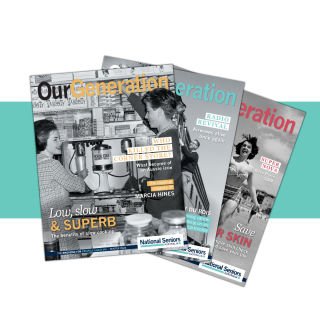
Our Generation Digital Magazine
Receive a yearly subscription to Our Generation Digital Magazine.

The Good Guys Commercial
Members enjoy exclusive access to The Good Guys Corporate Benefits. Save on small and large appliances as well as technology.

Advocacy & Research
Your membership directly funds our advocacy and research work fighting issues that affect you.

Competitions
Access exclusive member-only weekly competitions including books, DVDs, CDs, movie tickets and more.

Discounts
In addition to the discounts app, members can save thousands on eGift Cards and other discounted products.
*The discount applies to the total National Seniors travel insurance premium and is for National Seniors Australia members only. Discounts do not apply to the rate of GST and stamp duty or any changes you make to the policy. AGA has the discretion to withdraw or amend this discount offer at any time. This discount cannot be used in conjunction with any other promotional offer or discount.
National Seniors Australia Ltd ABN 89 050 523 003, AR 282736, is an authorised representative of AWP Australia Pty Ltd, ABN 52 097 227 177, AFSL 245631, trading as Allianz Global Assistance (AGA), and acts as AGA's agent and not as your agent. nib Travel Services (Australia) Pty Ltd (nib), ABN 81 115 932 173, AFSL 308461 acts as third party administrator on behalf of AGA, managing claims, complaints, enquiries and sales. This is general advice only. Before you buy, you should consider whether the product is appropriate for you, the Product Disclosure Statement (PDS), Financial Services Guide (FSG) and Target Market Determination (TMD) is available from us. This insurance is underwritten by Pacific International Insurance Pty Ltd, ABN 83 169 311 193, AFSL 523921.