A peek into the future of tech
Here is a quick look at some of the technological advances that promise (threaten?) to change our lives.

One of the side effects of getting older is that we get to see a lot of change. Many seniors will remember a time without television or air fryers, or when automatic transmission on cars was a novelty.
But time and innovation don’t stand still. The world our grandchildren inherit will feel vastly different from the one we grew up in.
From computers that understand images and speech, to cars that drive themselves (or even fly), to medicines that can edit our genes, it’s all under development – and this may be the year it comes together in a tangible way.
Here are just some of the things we may be able to expect soon.

Brain–computer interfaces are moving from science fiction to clinical reality. A company called Neuralink is evaluating a fully implantable, wireless interface to help people with paralysis control devices by thought alone.
However, early adopters are reminding us to keep our feet on the ground. Magician and molecular biologist Zi Teng Wang implanted a computer chip in his hand to help him perform tricks – but then he forgot the password! This has left him “locked out” of the device inside his own body.
This somewhat amusing story serves as a practical lesson about durability, support, and security when technology is literally under our skin.
Robotaxis are expanding across cities in America, and safety statistics from Waymo, the main operator, show markedly lower rates of crashes resultig in injury compared with human drivers.
However, the technology is not yet perfect. In 2025, Waymo needed to tweak the software over concerns its vehicles were passing stopped school buses and were at risk of crashing into some gates and barriers. When a citywide blackout in San Francisco stranded many driverless cars, the company paused its service and pledged to improve its systems.
AI systems now handle text, images, audio, and video in one model, and can work with extraordinarily long documents.
Concerns about this technology include their ability to create fake narratives – for example, by producing videos that show real people doing things they didn’t do and literally putting words into their mouths.
There are also concerns for the environment, as these computers chew up vast amounts of water (for cooling) and electricity.
The US Federal Drugs Administration has approved Clustered Regularly Interspaced Short Palindromic Repeats (CRISPR) therapy for sickle cell disease, signalling a new era in genetic medicine.
In 2025, researchers reported a genetic editing treatment created within months for an infant with a rare metabolic disorder, providing an early glimpse of “on-demand” therapies tailored to a single patient.
Other CRISPR trials suggest new treatments for people with certain liver and heart conditions, and for age-related macular degeneration.
While many seniors will welcome advances in technology, especially in the medical field, others will approach any changes with caution.
When it comes to AI, especially when it is used in the media, there are concerns about what we can believe.
As individuals, we need to be vigilant. Collectively, we should look to governments to ensure safeguards are in place to protect us from the abuse of technology.



Thousands of Australia-wide discounts
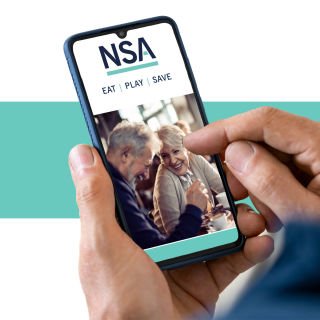
Exclusive offers and savings across dining, shopping, gift cards, and more – all in the EAT | PLAY | SAVE app.

Members save 10% on Travel Insurance*
National Seniors members receive a 10% discount on travel insurance policies*.

Financial Information Consultant
Speak to a real person and receive up-to-date information on retirement planning, superannuation, and more!

Branches
Expand your social circle, enjoy social events, day trips, guest speakers, and meet like-minded members.

Exclusive Travel Discounts
Save on tours, cruises, and holidays with exclusive discounts on National Seniors Travel.

Our Generation Digital Magazine
Receive a yearly subscription to Our Generation Digital Magazine.

The Good Guys Commercial
Members enjoy exclusive access to The Good Guys Corporate Benefits. Save on small and large appliances as well as technology.

Advocacy & Research
Your membership directly funds our advocacy and research work fighting issues that affect you.

Competitions
Access exclusive member-only weekly competitions including books, DVDs, CDs, movie tickets and more.

Discounts
In addition to the discounts app, members can save thousands on eGift Cards and other discounted products.
*The discount applies to the total National Seniors travel insurance premium and is for National Seniors Australia members only. Discounts do not apply to the rate of GST and stamp duty or any changes you make to the policy. AGA has the discretion to withdraw or amend this discount offer at any time. This discount cannot be used in conjunction with any other promotional offer or discount.
National Seniors Australia Ltd ABN 89 050 523 003, AR 282736, is an authorised representative of AWP Australia Pty Ltd, ABN 52 097 227 177, AFSL 245631, trading as Allianz Global Assistance (AGA), and acts as AGA's agent and not as your agent. nib Travel Services (Australia) Pty Ltd (nib), ABN 81 115 932 173, AFSL 308461 acts as third party administrator on behalf of AGA, managing claims, complaints, enquiries and sales. This is general advice only. Before you buy, you should consider whether the product is appropriate for you, the Product Disclosure Statement (PDS), Financial Services Guide (FSG) and Target Market Determination (TMD) is available from us. This insurance is underwritten by Pacific International Insurance Pty Ltd, ABN 83 169 311 193, AFSL 523921.