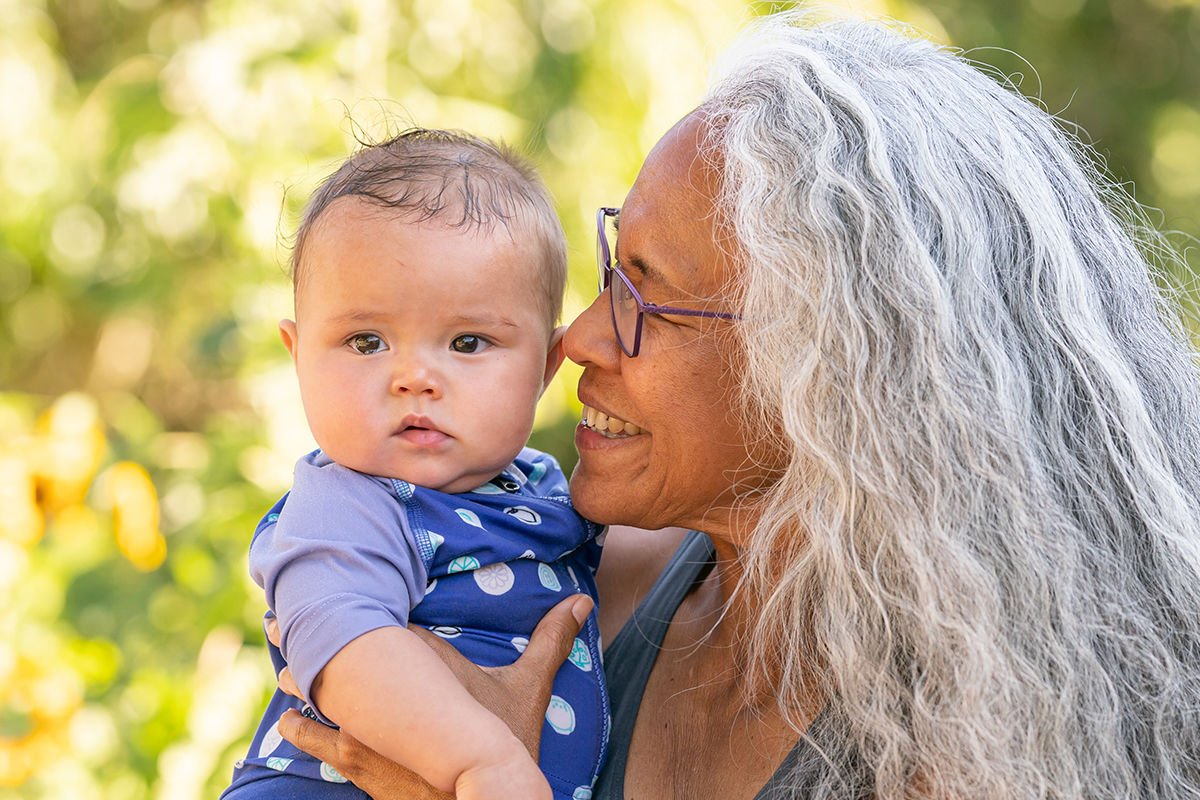
Caring for grandkids linked to brain health
Grandparents have mixed feelings towards caring for grandchildren – but studies suggest it comes with less altruistic benefits.
Dementia conference
Early bird registrations are now open for the International Dementia Conference which will be held at the Sydney Hilton from 4-6 June 2026.
The conference will feature a line-up of thought leaders, researchers, and people with lived experience, tackling topics as diverse as optimising living with dementia, dying well with dementia, better diagnostics, support for rare dementias, and the role of technology in better care and quality of life.
Television personality and journalist, Ray Martin, will be the MC, with speakers including palliative care specialist, Dr Kathryn Mannix, geriatrician, Dr Allen Power, and Scottish Brain Sciences co-founder, Professor Craig Ritchie
See the full program and register here.
Nearly one-third of Australian grandparents provide regular care to grandchildren or other children under the age of 12.
However, a National Seniors Australia (NSA) survey found their feelings towards the task were mixed and vary widely from joy and a sense of fulfillment to doubt and resentment.
It seems the pressures on grandparent carers is increasing, as family demands increase for them to do more.
The survey sought to better understand how, from a grandparent’s point of view, grandparenting should fit into the mix of childcare provision in Australia.
Grandparents believe childcare is one of their major contributions to society but, sadly, many feel unrecognised despite the size of their in-kind economic contribution.
They told our researchers they believed the public and family neglect is hurtful and compounded by strong voices saying that older Australians should be taking on greater economic burdens, as they are better off than younger generations.
You can read that report here.

Look on the bright side
The even better news is that helping care for grandchildren may help protect thinking and memory skills in older people, according to research published by the American Psychological Association.
The findings suggest that staying involved as a caregiving grandparent could play a role in slowing age-related cognitive decline.
That’s one of the research findings from Tilburg University in The Netherlands.
“We wanted to see if providing grandchild care might benefit grandparents’ health, potentially slowing down cognitive decline,” lead researcher, Flavia Chereches, said.
The researchers analysed data from 2,887 grandparents who participated in the English Longitudinal Study of Ageing.
All participants were aged 50-plus, with an average age of 67, and each of them completed surveys and cognitive assessments three times between 2016 and 2022.
They were asked whether they had cared for a grandchild during the previous year and, if so, how often and what the care involved.
Care included overnight sitting, caring for an ill child, playing or engaging in leisure activities, helping with homework, driving grandchildren to school and activities, and preparing meals.
“What stood out most to us was that being a caregiving grandparent seemed to matter more for cognitive functioning than how often grandparents provided care or what exactly they did with their grandchildren,” Ms Chereches said.
In other words, the benefits might not depend on how often care is provided, or on the specific activities done with grandchildren, but rather on the broader experience of being involved with caregiving.
Gender difference
The study found a slower cognitive decline for grandmothers caring for their grandchildren than other grandmothers, but the effect wasn’t as pronounced for grandfathers who provided care.
The difference may lie in how the genders engage with their grandchildren.
“Grandmothers are often viewed as the primary co-ordinators of childcare, with a greater emphasis on family support,” the report says.
“Grandfathers, in contrast, are reported to provide grandchild care more often in the presence of their spouse compared with grandmothers, suggesting a more peripheral and supportive role. Consequently, the level of cognitive stimulation from caregiving may be lower for grandfathers.”
Generally, grandparents who provided childcare performed better on measures of memory and verbal fluency than those who did not. These differences remained even after accounting for age, physical health, and other influencing factors. The results were consistent regardless of how often grandparents provided care or which activities they performed.
“More research is needed to replicate these findings, yet, if there are benefits associated with caregiving for grandparents, they might not depend on how often care is provided, or on the specific activities done with grandchildren, but rather on the broader experience of being involved with caregiving.”
Ms Chereches emphasised that future studies should examine how family circumstances shape these outcomes. The emotional and social context of caregiving could make an important difference.
“Providing care voluntarily, within a supportive family environment, may have different effects for grandparents than caregiving in a more stressful environment where they feel unsupported or feel that the caregiving is not voluntary or a burden,” she said.
Related reading: Tilburg University, The Australian, NSA





Thousands of Australia-wide discounts
Exclusive offers and savings across dining, shopping, gift cards, and more – all in the EAT | PLAY | SAVE app.

Members save 10% on Travel Insurance*
National Seniors members receive a 10% discount on travel insurance policies*.

Financial Information Consultant
Speak to a real person and receive up-to-date information on retirement planning, superannuation, and more!

Branches
Expand your social circle, enjoy social events, day trips, guest speakers, and meet like-minded members.

Exclusive Travel Discounts
Save on tours, cruises, and holidays with exclusive discounts on National Seniors Travel.

Our Generation Digital Magazine
Receive a yearly subscription to Our Generation Digital Magazine.

The Good Guys Commercial
Members enjoy exclusive access to The Good Guys Corporate Benefits. Save on small and large appliances as well as technology.

Advocacy & Research
Your membership directly funds our advocacy and research work fighting issues that affect you.

Competitions
Access exclusive member-only weekly competitions including books, DVDs, CDs, movie tickets and more.

Discounts
In addition to the discounts app, members can save thousands on eGift Cards and other discounted products.
*The discount applies to the total National Seniors travel insurance premium and is for National Seniors Australia members only. Discounts do not apply to the rate of GST and stamp duty or any changes you make to the policy. AGA has the discretion to withdraw or amend this discount offer at any time. This discount cannot be used in conjunction with any other promotional offer or discount.
National Seniors Australia Ltd ABN 89 050 523 003, AR 282736, is an authorised representative of AWP Australia Pty Ltd, ABN 52 097 227 177, AFSL 245631, trading as Allianz Global Assistance (AGA), and acts as AGA's agent and not as your agent. nib Travel Services (Australia) Pty Ltd (nib), ABN 81 115 932 173, AFSL 308461 acts as third party administrator on behalf of AGA, managing claims, complaints, enquiries and sales. This is general advice only. Before you buy, you should consider whether the product is appropriate for you, the Product Disclosure Statement (PDS), Financial Services Guide (FSG) and Target Market Determination (TMD) is available from us. This insurance is underwritten by Pacific International Insurance Pty Ltd, ABN 83 169 311 193, AFSL 523921.