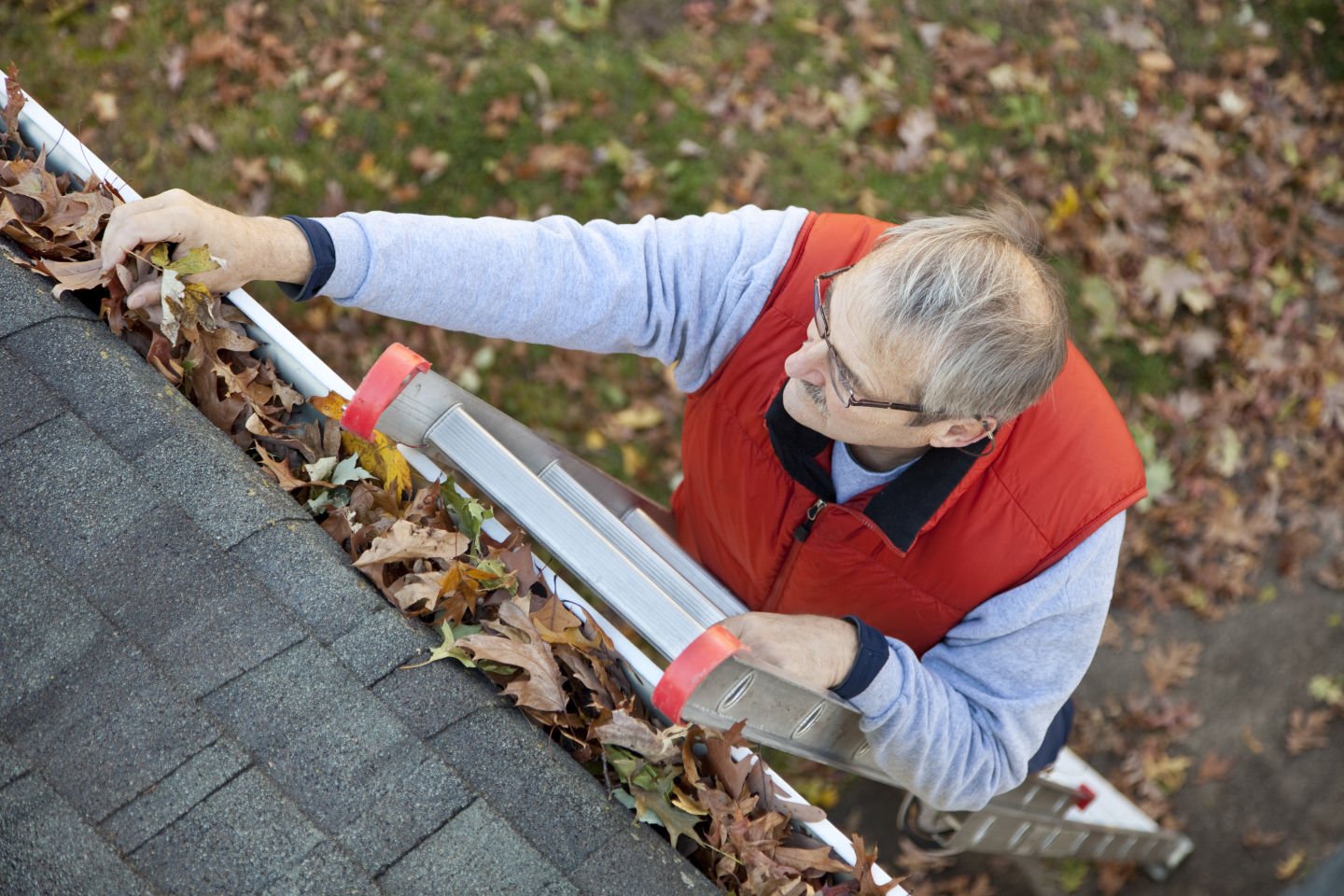
Men up ladders. What could possibly go wrong?
We find that often these falls can be really life-altering... sometimes it leads to a patient's death.
It was a surprise conversation with the hospital discharge doctor about a topic that had nothing to do with the operation I was recovering from.
He noticed I was on blood thinners and was disturbed at what he saw on my chart.
“Too many of them,” he said. “What if you fell off a ladder and hit your head? You’d bleed to death and there’s nothing we could do for you.”
What I took away from this cheery conversation was mixed – should I cut down the blood thinners or avoid ladders? Probably both. For the record, I later chatted to my cardiologist, but that’s another story.
Not long after, a friend, aged in his 60s, reported he was sore and out of action for a few weeks because of “awkwardly” coming down a ladder, one that extended from an attic inside the house.

I later read that ladder-related injuries among men aged 65 and older are steadily increasing in Australia.
For example, more than 1,000 Queenslanders are hospitalised each year after falling off ladders and most of these injuries happen around the home.
On average more than 30 Australians, mainly men, die each year after falling off ladders. Most men who are injured or killed are at or nearing retirement age and are doing maintenance around their home.
‘Ladder safety matters’ is a national education campaign that encourages older Australian men to stop and think before using a ladder. It’s often the split-second decision or risky shortcut that results in a fall.
Royal Brisbane and Women’s Hospital trauma surgery fellow, Rebekah Young, told ABC News that hospital presentations relating to ladder and roof falls are on the rise.
In her hospital alone, between July 2023 to July 2025, 189 patients were admitted for ladder and roof falls.
More than a third of those patients were aged 65 and older.
The hospital admitted 34 patients after ladder and roof falls in the 2023 calendar year and 64 in the first half of 2025 alone.
“We've had a lot of patients over the age of 80… coming in after falling from ladders and they are often people who have been quite fit at home, doing things around the house by themselves their whole life," Dr Young said.
"We find that often these falls can be really life-altering, and they may never get home again. Sometimes it leads to a patient's death.”
Dr Young said “anybody over 60” was at risk because older people have poor balance and are more likely to have other medical problems.
Her advice?
“Call a tradie if you can or get somebody younger to help you.”
The Victorian Government’s Better Health channel offers this advice about using ladders:
- Make sure your ladder is standards-approved, in good working order, is braced and the right height for the jobs you are likely to use it for.
- Should you even be using a ladder – consider your physical condition and health.
- Don’t work in wet, windy, or hot conditions. A very hot day can cause people to feel dizzy or faint and lose their balance on a ladder. A wet or windy day may cause you or the ladder to slip or fall.
- Check that your ladder is on even ground, as surfaces that are uneven or sloped will increase your risk of falling from the ladder.
- Make sure your ladder is not placed in front of outward-opening doors or windows.
- Wear non-slip, enclosed footwear. Do not wear socks, slippers, or shoes without a closed-in heel.
- Make sure someone is home with you while you are on the ladder, in case you have an accident and need assistance.
- Having another person with you to hold and support the ladder can help prevent the ladder from slipping.
- Maintain three points of contact at all times while on the ladder. Use two hands when climbing. When using a tool, make sure both feet and your other hand are secure on the ladder.
- Two people should never climb the ladder at the same time even if their combined weight is below the maximum weight capacity.
It may be unsafe for you to use a ladder if you experience:
- Dizziness, feeling faint or light-headed
- Low vision or trouble seeing
- Difficulties with your coordination, balance, or strength
- Side effects from medicine, including feeling dizzy or drowsy, as this may affect your balance and vision, and increase your risk of falling from a ladder.
Related reading: Queensland Government, ABC, Better Health Victoria
Related video: Ladder safety

This article is for information purposes only and should not be considered medical advice. Consult a doctor or other healthcare professional about any health concerns or before making any changes to your medication, diet, or exercise routine.


Thousands of Australia-wide discounts
Exclusive offers and savings across dining, shopping, gift cards, and more – all in the EAT | PLAY | SAVE app.
Members save 10% on Travel Insurance*
National Seniors members receive a 10% discount on travel insurance policies*.

Financial Information Consultant
Speak to a real person and receive up-to-date information on retirement planning, superannuation, and more!
Branches
Expand your social circle, enjoy social events, day trips, guest speakers, and meet like-minded members.

Exclusive Travel Discounts
Save on tours, cruises, and holidays with exclusive discounts on National Seniors Travel.

Our Generation Digital Magazine
Receive a yearly subscription to Our Generation Digital Magazine.

The Good Guys Commercial
Members enjoy exclusive access to The Good Guys Corporate Benefits. Save on small and large appliances as well as technology.
Advocacy & Research
Your membership directly funds our advocacy and research work fighting issues that affect you.

Competitions
Access exclusive member-only weekly competitions including books, DVDs, CDs, movie tickets and more.

Discounts
In addition to the discounts app, members can save thousands on eGift Cards and other discounted products.
*The discount applies to the total National Seniors travel insurance premium and is for National Seniors Australia members only. Discounts do not apply to the rate of GST and stamp duty or any changes you make to the policy. AGA has the discretion to withdraw or amend this discount offer at any time. This discount cannot be used in conjunction with any other promotional offer or discount.
National Seniors Australia Ltd ABN 89 050 523 003, AR 282736, is an authorised representative of AWP Australia Pty Ltd, ABN 52 097 227 177, AFSL 245631, trading as Allianz Global Assistance (AGA), and acts as AGA's agent and not as your agent. nib Travel Services (Australia) Pty Ltd (nib), ABN 81 115 932 173, AFSL 308461 acts as third party administrator on behalf of AGA, managing claims, complaints, enquiries and sales. This is general advice only. Before you buy, you should consider whether the product is appropriate for you, the Product Disclosure Statement (PDS), Financial Services Guide (FSG) and Target Market Determination (TMD) is available from us. This insurance is underwritten by Pacific International Insurance Pty Ltd, ABN 83 169 311 193, AFSL 523921.