Study slams TV’s treatment of older women
Research conducted in the UK and Australia reveals ageism and sexism in the media.
A new study has found that found that older women are under‑represented on British television, reflecting earlier research indicating ageism in the Australian media.
The British findings come from an independent review commissioned by the BBC, which examined how accurately the broadcaster reflects the lives and experiences of people across the United Kingdom.
The review, led by former British Academy of Film and Television Arts chair, Anne Morrison, and media consultant, Chris Banatvala, concluded that the BBC is still widely perceived as middle‑class and London‑centric, particularly among viewers from lower socio‑economic backgrounds and those living outside southern England.

The study also highlighted a persistent gender and age imbalance, particularly affecting older women.
Data covering almost 1,500 BBC presenters found that men significantly outnumber women in older age groups.
Across BBC content, there are nearly four times as many male presenters over 60 as female, with the disparity even more pronounced among those over 70.
The review’s authors reported evidence that older men are often perceived as gaining authority and credibility with age, while older women face pressure to look younger or withdraw from on‑screen roles altogether.
“There’s evidence that, as they age, women tend to move from television to audio,” the authors said. “We were told that, as they get older, men in the media are portrayed as gaining gravitas and wisdom associated with authority. It works differently for women.
“It was argued that, if they stayed on television, older women had either to try to keep looking younger or to opt out altogether from being judged on their looks and develop idiosyncratic personas.”
Although the review found no evidence of deliberate discrimination, it concluded that structural and cultural factors continue to limit the visibility of older women on British television.
The BBC has since committed to improving how it measures class, age, and geographical background in commissioning and on‑air roles.
In 2024, an Australian Human Rights Commission study found that older Australians, particularly older women, are frequently marginalised or stereotyped in television and news coverage, with ageing often framed negatively or treated as a social burden.
The report also identified gendered ageism, noting that stories about older women are more likely to focus on appearance than expertise or authority.
Other Australian media studies show that women remain under‑represented as authoritative voices on television and in news programming, despite making up roughly half the population.
Men continue to dominate on‑screen expert and presenter roles, particularly in senior and high‑profile positions.
Related reading: BBC, The Guardian, Women in Media, Human Rights Australia, NSA

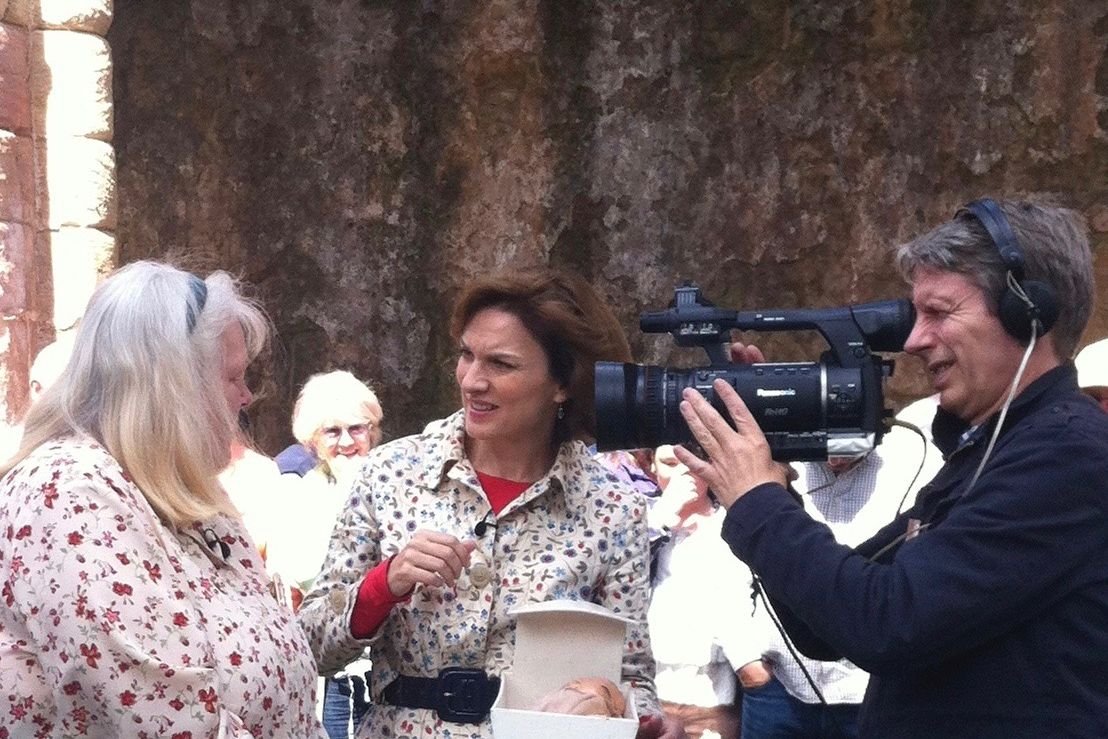
Photo: BBC Antiques Roadshow host Fiona Bruce at Fountains Abbey, Yorkshire. Image used under ShareAlike 4.0 International licence. User: Kjersti Lie.


Thousands of Australia-wide discounts
Exclusive offers and savings across dining, shopping, gift cards, and more – all in the EAT | PLAY | SAVE app.

Members save 10% on Travel Insurance*
National Seniors members receive a 10% discount on travel insurance policies*.

Financial Information Consultant
Speak to a real person and receive up-to-date information on retirement planning, superannuation, and more!

Branches
Expand your social circle, enjoy social events, day trips, guest speakers, and meet like-minded members.

Exclusive Travel Discounts
Save on tours, cruises, and holidays with exclusive discounts on National Seniors Travel.
Our Generation Digital Magazine
Receive a yearly subscription to Our Generation Digital Magazine.

The Good Guys Commercial
Members enjoy exclusive access to The Good Guys Corporate Benefits. Save on small and large appliances as well as technology.
Advocacy & Research
Your membership directly funds our advocacy and research work fighting issues that affect you.

Competitions
Access exclusive member-only weekly competitions including books, DVDs, CDs, movie tickets and more.

Discounts
In addition to the discounts app, members can save thousands on eGift Cards and other discounted products.
*The discount applies to the total National Seniors travel insurance premium and is for National Seniors Australia members only. Discounts do not apply to the rate of GST and stamp duty or any changes you make to the policy. AGA has the discretion to withdraw or amend this discount offer at any time. This discount cannot be used in conjunction with any other promotional offer or discount.
National Seniors Australia Ltd ABN 89 050 523 003, AR 282736, is an authorised representative of AWP Australia Pty Ltd, ABN 52 097 227 177, AFSL 245631, trading as Allianz Global Assistance (AGA), and acts as AGA's agent and not as your agent. nib Travel Services (Australia) Pty Ltd (nib), ABN 81 115 932 173, AFSL 308461 acts as third party administrator on behalf of AGA, managing claims, complaints, enquiries and sales. This is general advice only. Before you buy, you should consider whether the product is appropriate for you, the Product Disclosure Statement (PDS), Financial Services Guide (FSG) and Target Market Determination (TMD) is available from us. This insurance is underwritten by Pacific International Insurance Pty Ltd, ABN 83 169 311 193, AFSL 523921.