New report sheds light on rural, regional, and remote
Our surveys show that older people in regional rural and remote areas have bigger challenges than their city cousins.
Higher percentages of older Australians in rural and remote locations find it hard to access or afford healthcare than metro residents, new research from National Seniors Australia (NSA) has shown.
They are also less likely to have private health insurance or to be vaccinated against shingles, COVID, or the flu, and more likely to face barriers to getting out and about or to using digital technologies.
The research report is based on new analyses of National Seniors Social Survey (NSSS) data from 2023, 2024, and 2025, that compared the results by location: metro vs regional centres vs rural/remote.
On most of the measures we tested, there was a relatively consistent trend with older people living in rural/remote being worse off than regional centres and those in metropolitan areas.
This probably won’t surprise anyone living in the country or the bush.
We know from existing research by the Australian Institute of Health and Welfare that, on average, people living outside major cities face substantial disadvantage in many domains relevant to ageing including healthcare access, health conditions, and lifespan.
The new NSA findings echo the research others have done.
The NSA research team conducted the comparisons for our major funder, the Department of Health, Disability, and Ageing (DHDA) to give them further insights into the challenges facing seniors in regional, rural and remote Australia.
DHDA has a special interest in the welfare of older people who are members of diversity groups, including people from rural and remote areas, to ensure no one gets left behind.
The regional/rural/remote focus was important for NSA because two-fifths of our survey participants are from regional, rural or remote locations and their voices are often not well heard.
For that reason, we have a new research project rolling out focusing on ageing in regional, rural and remote locations.

Upcoming face-to-face and online regional forums: get involved
Under our current DHDA grant, NSA will engage older people in conversation about the things they need as they age, whether they can get them in the local community, and what the barriers are if they can’t.
We have identified six NSA branches in Queensland, Northern Territory, Victoria, New South Wales, and Tasmania for this project and will be conducting two online forums for regional members in Western Australia and South Australia.
Aside from getting your views on ageing in regional, rural, and remote Australia, we will also have staff from Centrelink available to provide information about the new Support at Home program.
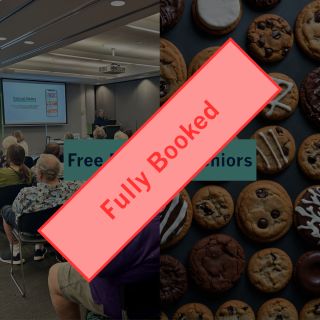
Thank you to those who have already participated in the Albury and Alice Springs forums, your input has been invaluable.
If you’d love you to participate in the remaining forums, you can check out the locations and register for these events by clicking here.







Thousands of Australia-wide discounts
Exclusive offers and savings across dining, shopping, gift cards, and more – all in the EAT | PLAY | SAVE app.

Members save 10% on Travel Insurance*
National Seniors members receive a 10% discount on travel insurance policies*.

Financial Information Consultant
Speak to a real person and receive up-to-date information on retirement planning, superannuation, and more!

Branches
Expand your social circle, enjoy social events, day trips, guest speakers, and meet like-minded members.

Exclusive Travel Discounts
Save on tours, cruises, and holidays with exclusive discounts on National Seniors Travel.

Our Generation Digital Magazine
Receive a yearly subscription to Our Generation Digital Magazine.

The Good Guys Commercial
Members enjoy exclusive access to The Good Guys Corporate Benefits. Save on small and large appliances as well as technology.
Advocacy & Research
Your membership directly funds our advocacy and research work fighting issues that affect you.

Competitions
Access exclusive member-only weekly competitions including books, DVDs, CDs, movie tickets and more.

Discounts
In addition to the discounts app, members can save thousands on eGift Cards and other discounted products.
*The discount applies to the total National Seniors travel insurance premium and is for National Seniors Australia members only. Discounts do not apply to the rate of GST and stamp duty or any changes you make to the policy. AGA has the discretion to withdraw or amend this discount offer at any time. This discount cannot be used in conjunction with any other promotional offer or discount.
National Seniors Australia Ltd ABN 89 050 523 003, AR 282736, is an authorised representative of AWP Australia Pty Ltd, ABN 52 097 227 177, AFSL 245631, trading as Allianz Global Assistance (AGA), and acts as AGA's agent and not as your agent. nib Travel Services (Australia) Pty Ltd (nib), ABN 81 115 932 173, AFSL 308461 acts as third party administrator on behalf of AGA, managing claims, complaints, enquiries and sales. This is general advice only. Before you buy, you should consider whether the product is appropriate for you, the Product Disclosure Statement (PDS), Financial Services Guide (FSG) and Target Market Determination (TMD) is available from us. This insurance is underwritten by Pacific International Insurance Pty Ltd, ABN 83 169 311 193, AFSL 523921.
Photo: Erin Abbott/ Pexels